
Is Shilajit Safe? Big-Picture Safety Guide & Essentials
“Is Shilajit safe?” is the right question to ask before you worry about benefits. This guide looks at safety in plain language: what “safe” actually means, how product quality and your health history change the answer, and when Shilajit might make sense—or not—as one small part of an adult wellness routine. It is educational only and not personal medical advice.
Quick Summary: Is Shilajit Safe?
For many generally healthy adults, a purified, tested Shilajit product used at modest servings is often considered reasonably safe as a traditional wellness supplement. Safety drops quickly, however, if the product is contaminated, if you take more than recommended, or if you have medical conditions or medications that make Shilajit a poor fit. The best answer is always personal and should involve a qualified healthcare professional.
- “Natural” ≠ automatically safe for everyone
- Purified, tested resin is safer than raw or untested material
- Your medical history and medications matter as much as the product
- Shilajit should never replace diagnosis or treatment
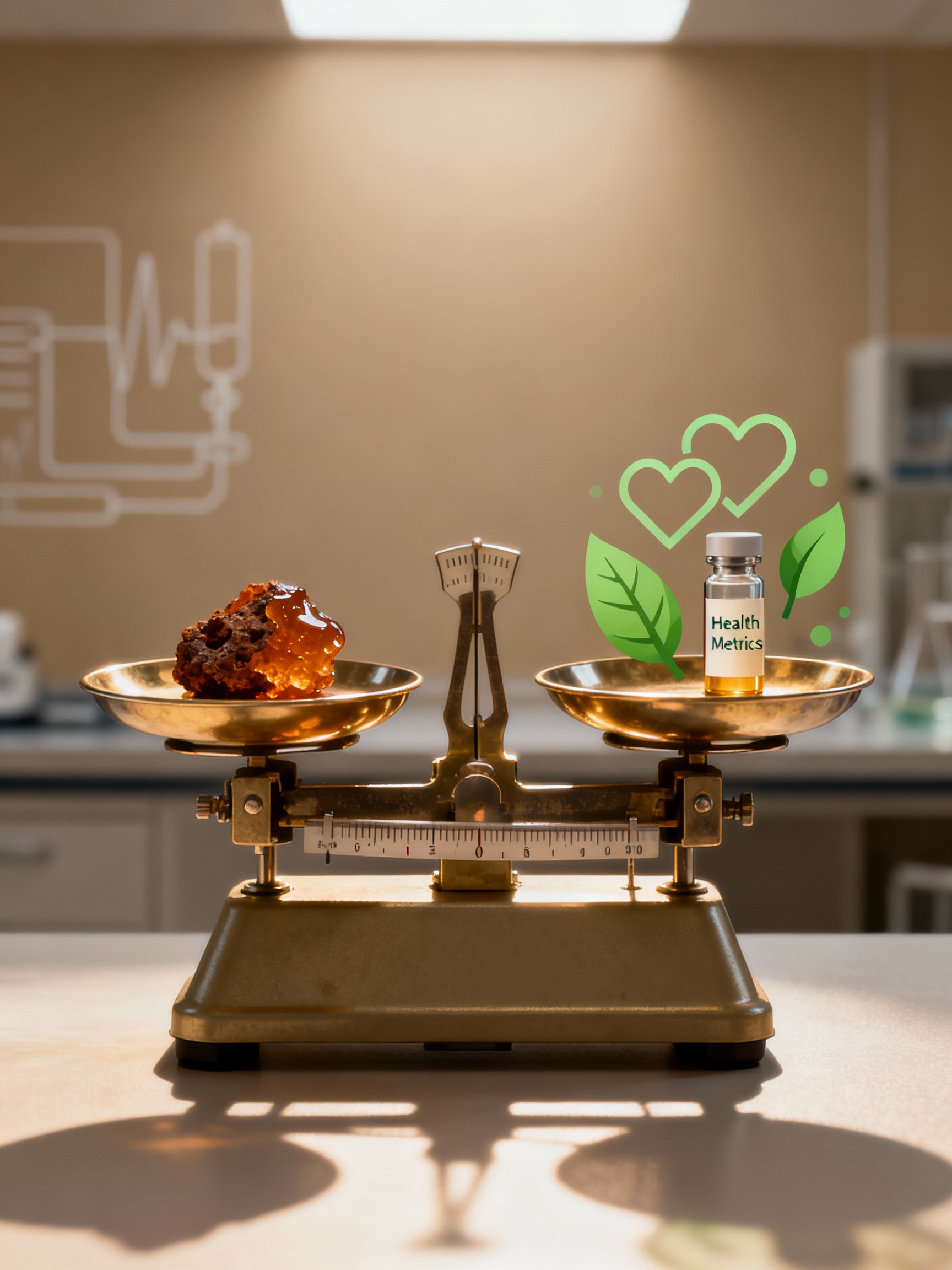
What “Safe” Actually Means on This Page
People often use “safe” to mean “no risk at all,” but almost nothing in health fits that description—not coffee, not over-the-counter pain relievers, and not Shilajit.
For this guide, “safe” means:
- Reasonable to consider for some adults
- Using purified, tested products at label-directed servings
- With medical input when you have conditions or take medications
- And with a clear plan to stop if problems appear
It does not mean:
- Guaranteed risk-free for every person
- Safe at any dose or from any source
- Safe to use instead of medical treatment
- Safe for children, pregnancy, or serious illness by default
Keeping this definition in mind makes Shilajit conversations more honest and useful.
Big-Picture Safety Verdict (In Plain Language)
If you pressed a cautious, evidence-aware practitioner for a short answer, it might sound like this:
The rest of this page unpacks what “acceptable” means and how to tilt the odds toward safety if you and your clinician decide to include Shilajit in your routine.
For a detailed look at specific side effects and red flags, see Shilajit Side Effects & Safety.
The 3 Big Factors That Shape Shilajit Safety
Whether Shilajit is a reasonable option for you depends on three main things: the person, the product, and the pattern of use.
1. The person (you)
- Current health conditions and diagnoses
- Medications and other supplements you take
- Kidney, liver, cardiovascular, and hormone health
- History of strong reactions to supplements
2. The product
- Purification methods used
- Independent testing for heavy metals & contaminants
- Form (resin, capsule, powder, gummies, blends)
- Added ingredients like fillers, sweeteners, or other herbs
3. The pattern of use
- How much you take relative to the label
- How often and for how long you use it
- Whether you introduce it slowly or jump to high doses
- Whether you keep your clinician informed and watch for changes
Bottom line
The same jar of Shilajit can be a reasonable experiment for one person and a poor choice for another. Context is everything.
When Shilajit May Be Reasonable to Consider
This is not a recommendation to take Shilajit. Instead, it describes the kinds of situations where people and their clinicians often decide the risk–benefit balance can be acceptable.
Often more reasonable
- Generally healthy adult
- Uses few or no prescription medications
- Has recent check-ups and basic labs
- Chooses a purified, third-party-tested resin or simple capsule
- Starts with modest servings and tracks how they feel
Supportive habits already in place
- Reasonable sleep, nutrition, and movement patterns
- Stress management and mental health support where needed
- Willingness to stop if side effects appear
Even in these “safer” scenarios, a brief conversation with a healthcare professional is still wise before starting.
When Shilajit May Not Be a Good Idea
In some situations, Shilajit may add more risk than value, or may simply distract from care that matters more.
Situations where Shilajit is usually not appropriate
- Pregnancy, trying to conceive, or breastfeeding without explicit medical approval
- Children or teenagers (most Shilajit products are for adults only)
- Significant kidney or liver disease
- Known heavy metal issues or toxin exposure
- History of strong reactions to mineral-rich or herbal products
Patterns that increase risk
- Using untested, raw, or extremely cheap Shilajit
- Exceeding recommended servings or “megadosing”
- Taking multiple stimulant or “performance” supplements together
- Using Shilajit instead of seeing a doctor for serious symptoms
If you see yourself in these lists, Shilajit is something to approach very cautiously—or avoid—unless a clinician specifically recommends otherwise.
Comparing Shilajit Safety to Other Wellness Options
It can help to compare Shilajit not to a perfect, risk-free world—but to other things people actually do for wellness.
| Option | How safety is often framed |
|---|---|
| Basic habits (sleep, food, movement) | Highest long-term impact and best safety profile for most people when applied sensibly. |
| Common supplements (vitamins, minerals) | Can be very safe when indicated and dosed appropriately—but harmful in excess or in certain conditions. |
| Shilajit (purified, tested) | Traditional resin with a reasonable safety profile in healthy adults at modest servings; more caution needed with medical issues. |
| Untested or extreme protocols | Highest concern: unverified substances, stacked “biohacks,” and advice from non-qualified sources can significantly increase risk. |
In a thoughtful, clinician-guided wellness plan, Shilajit belongs—if at all—after basics and foundational care are addressed.
How Clinicians Tend to Think About Shilajit
Different healthcare professionals have different opinions, but many share a few core themes when patients ask about Shilajit:
Common clinician perspectives
- Interest in lab data and product testing before commenting on safety
- Focus on your specific health conditions and medications
- Emphasis on not replacing proven treatments with supplements
- Preference for simpler formulas over complex blends
How to make the conversation easier
- Bring the actual product or clear photos of the label
- Share all medications and supplements you already take
- Explain what you hope Shilajit might do (in plain language)
- Ask how they would monitor safety if you decide to try it
Approaching Shilajit as a conversation, not a secret experiment, makes it much easier to use safely—if you both agree it makes sense.
Safety Checklist Before You Start Shilajit
If you’re considering Shilajit, this high-level checklist can help you slow down, think clearly, and involve the right people.
Before you buy
- Clarify why you’re interested (in a sentence or two)
- Check that the product is purified and third-party tested
- Review the ingredient list for fillers and additives
- See whether the brand avoids disease and hormone claims
Before you take your first serving
- Tell your clinician you plan to try Shilajit
- Review your medications and conditions together
- Agree on a starting serving and when to re-check
- Know what side effects or changes would mean “stop and call”
For a deeper dive into specific side effects and precautions, read Shilajit Side Effects & Safety next.
Authoritative Safety Sources & Research
Shilajit has a long history of traditional use, but its big-picture safety depends heavily on how it’s sourced, purified, and used, as well as on a person’s underlying health. Modern research looks at both potential wellness benefits and important concerns like heavy metals, contaminants, and product quality. A practical safety overview focuses on choosing tested products, recognizing who may be at higher risk, and understanding what current science does—and does not—yet know.
Authoritative Sources
-
Operation Supplement Safety (U.S. DoD) – Plain-language safety brief on shilajit as a supplement ingredient, highlighting heavy-metal concerns, product variability, and the importance of third-party testing and certification.
Shilajit as a Dietary Supplement Ingredient – OPSS -
Peer-reviewed safety and toxicology data on shilajit and related humic/fulvic substances – Animal and human data on standardized preparations, including sub-chronic safety, toxicology, and general tolerability, while noting remaining uncertainties about long-term dosing.
Evaluation of Safety Profile of Black Shilajit – PMC
Therapeutic Potential of Fulvic Acid – PMC -
Heavy metals and Ayurvedic/traditional products (public health and regulatory advisories) – Government and public health summaries documenting that some Ayurvedic-style products can contain lead, mercury, arsenic, and other metals at harmful levels, explaining health risks and the need for laboratory testing.
CDC/NIH-indexed Study on Metals in Ayurvedic Medicines
California Department of Public Health – Heavy Metals in Alternative Remedies
NC DHHS – Ayurvedic Medicines and Heavy Metals -
Regulatory warning on heavy-metal-containing Ayurvedic products (FDA) – U.S. FDA communication describing heavy-metal poisoning cases from certain unapproved Ayurvedic products and emphasizing the lack of pre-market approval for such supplements.
FDA – Heavy Metal Poisoning and Certain Ayurvedic Products -
Recent scientific reviews on shilajit composition, metals, and safety – Contemporary review literature assessing humic substances, metal content, and the balance of potential benefits versus risks when heavy metals or contaminants are present.
Hazardous or Advantageous? Heavy Metals and Humic Substances in Shilajit
Neuroprotective Potential and Safety Concerns of Shilajit (2024 Review)
This content is for educational purposes only and is not a substitute for professional medical advice, diagnosis, or treatment.
FAQs: Is Shilajit Safe?
Is Shilajit safe to take every day?
Is Shilajit safe for people over 40 or 50?
Is Himalayan Shilajit safer than other types?
Is Shilajit safe if I have high blood pressure or heart issues?
Is Shilajit safe for people with thyroid or hormone conditions?
If Shilajit is natural and traditional, why do I need a doctor?
Continue Learning About Shilajit
Let Safety Lead Every Shilajit Decision
If you’re drawn to Shilajit, the most important “step one” is not buying a jar—it’s understanding how it fits into your health picture. Talk with your clinician, choose products that prioritize testing and transparency, and be willing to walk away if the safety trade-offs don’t feel right for you.
Explore Purified Shilajit ResinThis page is for educational purposes only and is not intended to diagnose, treat, cure, or prevent any disease. These statements have not been evaluated by the FDA. Always consult a qualified healthcare professional before using any supplement or changing your health routine.
About This Guide
Herbs Mill Research & Education Team
Herbs Mill focuses on safety-first education about Shilajit and other traditional resins. Our goal is to give you clear, realistic language to use with your healthcare professional, so you can make informed decisions together instead of relying on hype.