
How to Store Shilajit: Guide to Shelf Life and Freshness
Looking for “How to Store Shilajit”? This guide covers How to Store Shilajit. Shilajit is a concentrated natural resin. It doesn’t need a high-tech fridge or a complicated ritual—but it does benefit from thoughtful storage. Heat, light, moisture, and repeated dipping with the same spoon can all affect how fresh, stable, and pleasant your Shilajit stays. This guide walks through simple, practical steps to protect quality for as long as the product’s label suggests.
Quick Overview: Storage & Freshness in Plain Language
You don’t need to overthink Shilajit storage. Most of the time, the basics are:
- Keep it cool (room temperature or slightly cooler, not hot).
- Keep it dry (no water in the jar, lid on tight).
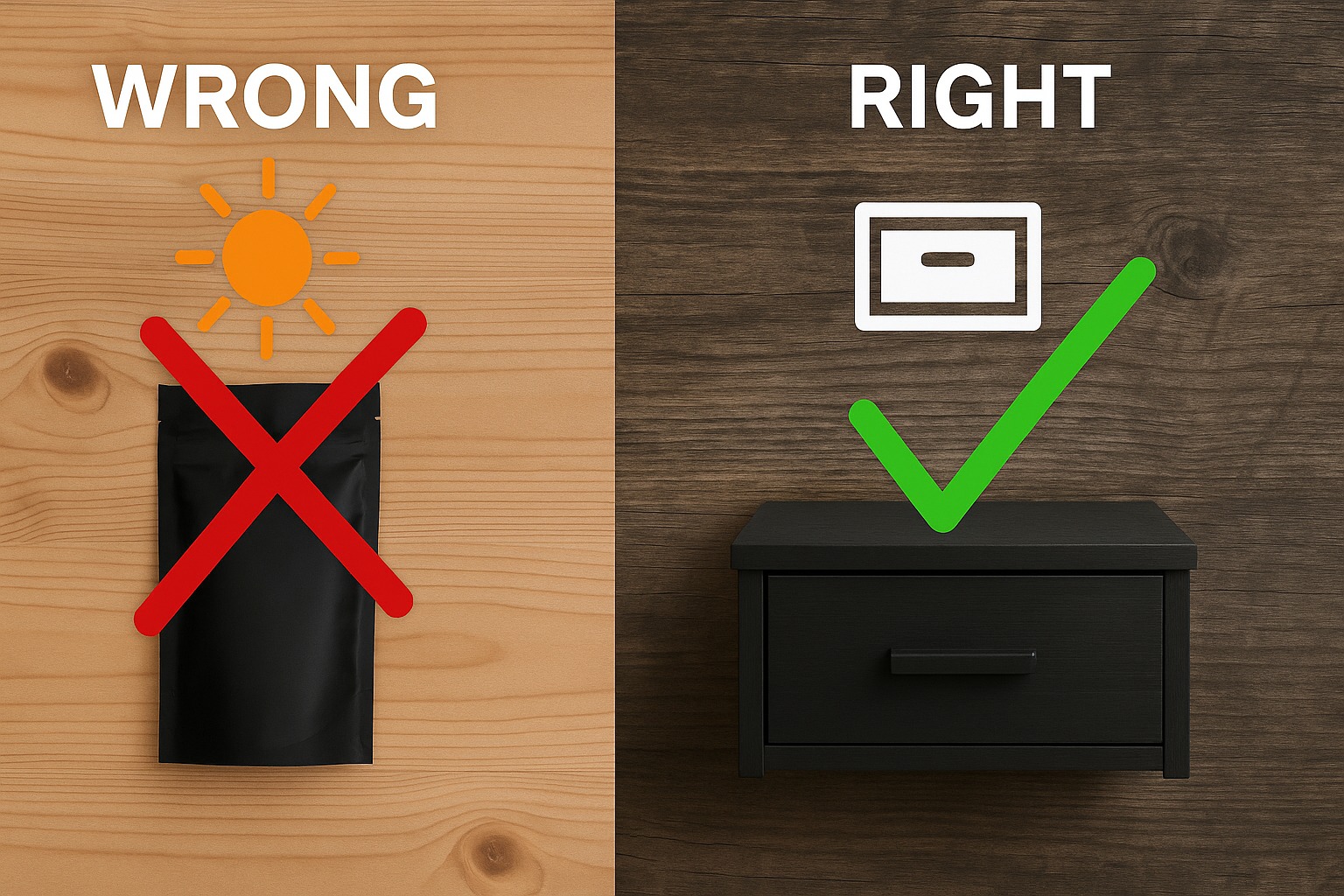
- Keep it dark (away from direct sunlight or strong heat sources).
- Keep it clean (use a dry spoon, avoid double-dipping).
Why Shilajit Storage Matters
Shilajit is dense and relatively stable, but it’s still a natural substance. Over time, poor storage can lead to:
- Texture changes (too hard, too sticky, oddly separated).
- Flavor shifts (rancid, sour, or “off” notes).
- Moisture problems (condensation, clumping, or visible mold).
- Contamination from repeated contact with saliva or wet utensils.
Good Storage Helps You:
- Stay closer to what the brand actually tested in their lab reports.
- Make portions more consistent over time.
- Get more value out of what you paid for, instead of throwing it away early.
Storage does not turn Shilajit into something it isn’t—it simply helps protect the product you chose.
How to Store Shilajit Resin (Most Common Scenario)
Resin is the form that most closely matches Shilajit’s natural state. It’s also the format where storage habits make a clear difference.
Day-to-Day Resin Storage
- Keep the original container: Use the jar or tub it came in, especially if it’s dark glass or opaque plastic.
- Store in a cool, dry cupboard: Avoid windowsills, above the stove, or next to appliances that release heat.
- Close the lid firmly after each use: This helps limit moisture and air exposure.
- Use a clean, dry tool: A small spoon or spatula is better than fingers or wet utensils.
Do You Need to Refrigerate Resin?
- Many people keep resin at room temperature as long as the environment is not very hot or humid.
- Some brands explicitly recommend refrigeration; others do not. Follow your label first.
- If you refrigerate, expect the resin to become firmer. You may need to let it soften for a moment before scooping.
If you live in a very hot climate without air conditioning, keeping the jar in a cooler, darker area—or sometimes a fridge—may help protect texture and flavor.
Powders, Capsules & Gummies: Storage Basics
Not all Shilajit products are resin. Storage still matters, but the details can change with the format.
Powders
- Keep the lid or pouch closure tightly sealed to reduce moisture and clumping.
- Avoid storing above kettles or humid dishwashers.
- If your climate is very humid, consider adding a food-safe desiccant packet if the brand recommends it.
Capsules & Tablets
- Leave them in their original bottle or blister packs.
- Keep caps closed and avoid bathroom cabinets where steam may build up.
- Do not transfer into unlabeled pill organizers for very long periods; you may lose track of expiry dates.
Gummies & Liquid Blends
- Gummies are usually more sensitive to heat; they may melt or stick together.
- Many gummy and liquid products suggest cooler storage or even refrigeration—check your label.
- Watch for changes in smell, texture, or visible mold; if in doubt, do not consume.
Remember that multi-ingredient products (gummies, blends, flavored liquids) may follow storage rules closer to foods than to pure resin.
Heat, Light, Moisture & Contamination
The main enemies of freshness are more boring than dramatic: they’re simply heat, light, water, and germs from repeated contact.
Things to Avoid
- Leaving the jar open on the counter while boiling water nearby.
- Storing Shilajit in a car, backpack, or suitcase in hot sun.
- Dipping a wet spoon (or fingers) into the resin.
- Transferring into unlabelled containers without noting dates.
Small Habits That Help
- Open the jar only as long as needed, then close it again.
- Use a dedicated, dry spoon that you rinse and dry between uses.
- Keep the container in a cupboard away from direct light and warmth.
- Check occasionally for obvious changes in smell, color, or visible growth.
For a deeper dive on safety and contaminants, see Shilajit and Heavy Metals: What Lab Testing Actually Shows and Shilajit Side Effects: What You Should Know Before Using It.
Shilajit Gold formulasShelf Life, Expiry Dates & When to Replace
Different brands assign different shelf lives based on their own testing and regulations. A few general points can still help you read the fine print.
| Label Term | What It Generally Means |
|---|---|
| “Best before” date | Quality is expected to be highest before this date if stored as directed. After this date, texture and flavor may change more quickly. |
| “Use by” or “Expiry” date | Indicates the date after which the manufacturer does not recommend using the product. It’s typically more conservative than a “best before” date. |
| Lot / batch number | Links your jar to specific lab tests and production runs. Keep this number if you ever contact the brand about quality questions. |
If your product is well past its labeled date—or has been stored in very poor conditions—it’s usually safer to replace it rather than trying to “rescue” the jar.
What is Shilajit extract?Travel & Daily-Use Tips (Work, Gym, Trips)
Many people like to keep Shilajit near where they actually use it—on a work desk, in a travel kit, or by the kettle. That’s fine with a few tweaks.
If You Take Shilajit to Work or the Gym
- Use a small, well-labeled container rather than carrying a large jar everywhere.
- Keep it in a bag or drawer away from direct sun or heaters.
- Still use a clean, dry spoon; avoid dipping directly from a shared container.
If You Travel with Shilajit
- Check local regulations if you’re crossing borders with any supplement.
- Pack in a leak-resistant container inside a small bag in case of temperature swings.
- Avoid leaving the product in a hot car, on a sunny hotel windowsill, or near radiators.
For longer trips or extreme temperatures, some people choose capsules or tablets instead of resin, as they may be easier to handle and portion.
Signs Your Shilajit May Have Gone Off
Natural products can change over time. Not every small change is dangerous—resin can become a bit firmer or softer with temperature. But some signs suggest the product should not be used.
Reasons to Stop Using the Product
- Visible mold, fuzzy growth, or unusual spots not present before.
- Strong, sour, rancid, or chemical odors that were not there at the start.
- Jars that have been accidentally contaminated with water, food, or saliva.
- Product stored for a long time well past its stated date in poor conditions.
What to Do If You Notice These Signs
- Do not try to scrape off “just the top layer” and continue using it.
- Contact the brand’s support team, sharing photos and batch numbers if possible.
- If you’ve already consumed some and feel unwell, speak with a healthcare professional.
When in doubt, it’s usually safer to replace a questionable product than to take the risk of continuing.
This page focuses on storage and quality. It does not provide medical advice about whether Shilajit is appropriate for you personally. Always consult a qualified healthcare professional before using any supplement, especially if you have existing health conditions or take medications.
Authoritative Sources & Research Context
Proper storage of Shilajit helps maintain its bioactive compounds and quality. Understanding its chemical composition informs best storage practices.
Authoritative Sources
-
National Library of Medicine (NLM) – PubMed – Uncovering the Roles of Heavy Metals and Humic Substances in Shilajit.
PubMed – Shilajit Composition -
ScienceDirect – Shilajit-Analytical Study to Understand the Phytocomplex.
ScienceDirect – Shilajit Analysis -
ACS Omega – Chemical Analysis of Native Himalayan Shilajit.
ACS Omega – Shilajit Chemistry -
Examine.com – Shilajit Evidence-Based Review.
Examine.com – Shilajit
This section is for general informational purposes only and is not a substitute for professional medical advice.
FAQs: How to Store Shilajit
Do I have to refrigerate Shilajit resin?
My resin became very hard in the fridge. Is it ruined?
Can I leave Shilajit on the kitchen counter?
What if I accidentally got water into the resin jar?
Is it okay to transfer Shilajit into a different container?
How long does Shilajit really last?
Continue Learning About Shilajit
Protect the Shilajit You Chose with Simple Storage Habits
Choosing a clean, well-tested Shilajit product is step one. Step two is quietly protecting it from heat, light, moisture, and contamination so it stays closer to what the brand actually tested. A cool cupboard, a tight lid, and a dry spoon go a long way toward keeping each serving consistent and predictable.
Explore Purified, Lab-Tested Shilajit ResinThis page is for educational purposes only and is not intended to diagnose, treat, cure, or prevent any disease. These statements have not been evaluated by the FDA. Always consult a qualified healthcare professional before using any supplement or changing your health routine.
About This Storage & Shelf-Life Guide
Herbs Mill Editorial Team
The Herbs Mill team focuses on calm, compliance-first education about traditional resins like Shilajit. Beyond myths and hype, we emphasize practical topics—like storage, quality, and label-reading—so that if you do choose to keep Shilajit in your cupboard, you know how to look after it thoughtfully.