
Shilajit for Immunity & Resilience: Tradition vs Evidence
“Immune-boosting Shilajit” is a popular headline—but immune systems are not light switches you flip on with a scoop of resin. They’re complex networks influenced by sleep, stress, infections, vaccines, genetics, and much more. This guide looks at how traditional sources describe resilience, how modern brands talk about “immunity,” and what a realistic, compliance-safe view of Shilajit in this area actually looks like.
Quick Overview: Immunity, Resilience & Shilajit
Shilajit is a natural mountain resin that some traditions associate with general strength and vitality. Modern supplements sometimes extend that story into bold “immune” claims. A calmer, safer summary:
- Shilajit is not an antibiotic, antiviral, or vaccine.
- It should not replace medical care, vaccinations, or public health guidance.
- People who use it for “immune support” usually mean general resilience, not treatment.
- Sleep, nutrition, stress care, and hygiene are far more important than any supplement.
What People Actually Mean by “Immune Support”
“I want to support my immune system” can mean different things, such as:
- “I feel run down and catch colds easily.”
- “I want to recover more smoothly from busy seasons.”
- “I want to do what I can to stay generally well.”
- “I’m anxious about getting sick and want to feel proactive.”
These concerns may relate to lifestyle, exposure, stress, underlying conditions, or medications. None of those can be fully handled by a single ingredient, and certainly not without professional input.
Helpful Questions to Ask Yourself
- Am I mostly after peace of mind, or do I have specific medical concerns?
- Have I talked with my clinician about vaccines, sleep, nutrition, and stress yet?
- Am I hoping a supplement will replace changes that feel harder (like rest or boundary-setting)?
Honest answers here can prevent disappointment and keep expectations realistic.
Traditional Perspectives on Resilience & “Defenses”
Traditional systems do not describe immune cells the way modern immunology does. Instead, they often use broader concepts like:
- Overall vitality, strength, and “fortification.”
- Capacity to bounce back after exertion or seasonal changes.
- Support for long-term balance, not quick fixes during illness.
Shilajit sometimes appears in this context as a rare, mountain-derived substance used in small amounts within complex formulations. It’s a supporting actor, not the entire script.
How Modern Marketing Talks About Shilajit & Immunity
In today’s supplement market, you’ll see Shilajit in:
- “Immune support” capsules and powders.
- Multi-ingredient blends for “defense,” “shield,” or “protection.”
- Formulas combining Shilajit with vitamins, mushrooms, or herbs.
More Responsible Label Language
- “Supports general wellness” or “supports healthy lifestyle.”
- Standard supplement disclaimer clearly visible.
- No promises to prevent or treat specific infections or diseases.
Red-Flag Language
- Claims to “cure” or “prevent” named diseases or infections.
- Positioning Shilajit as an alternative to vaccines or medical care.
- Phrases like “never get sick again” or “guaranteed protection.”
The more a label sounds like a miracle drug instead of a supplement, the more carefully you may want to look at the brand’s overall credibility.
Evidence & Limits: What Is and Isn’t Known
There is ongoing scientific interest in many traditional substances, including Shilajit. But it’s important to separate:
Reasonable Generalizations
- Shilajit is a complex natural resin used traditionally in small amounts.
- People often use it alongside many other health habits, not on its own.
- Different products can vary in purity, composition, and testing.
Overstatements to Avoid
- Claiming Shilajit “boosts immunity” in a specific, guaranteed way.
- Suggesting it can replace medical treatment or infection control measures.
- Using small or preliminary findings to justify big, absolute claims.
Transparent brands will usually present Shilajit as a supportive supplement, not a magic shield against illness.
A Realistic Role for Shilajit in “Staying Well” Routines
For someone who has already done the basics with their clinician, Shilajit might play a small role in a broader, resilience-focused routine.
How Some People Use It (Non-Medical)
- Check with a clinician: Review medications, conditions, and whether Shilajit is appropriate at all.
- Choose a tested product: Prefer purified Shilajit with batch-specific lab reports.
- Start with small, label-based portions: Avoid experimenting with large doses.
- Pair with basics: Use as a symbolic reminder to hydrate, eat well, and rest—rather than as a substitute.
What It Should Never Replace
- Vaccinations and recommended public health measures.
- Medical evaluation for fevers, infections, or chronic symptoms.
- Prescribed medications or treatment plans.
- Hygiene, handwashing, or sensible contact precautions.
Foundations of Immune Health That Matter More Than Any Supplement
Immune systems respond strongly to everyday life—not just bottles on a shelf. While the exact priorities will vary by person, many clinicians focus on:
Common Lifestyle Foundations
- Adequate, regular sleep (both quantity and timing).
- Balanced nutrition, including enough calories and key micronutrients.
- Physical activity appropriate for your abilities and conditions.
- Stress management and mental health support.
- Not smoking, moderating alcohol, and following medical advice.
Where Shilajit Might Fit (If at All)
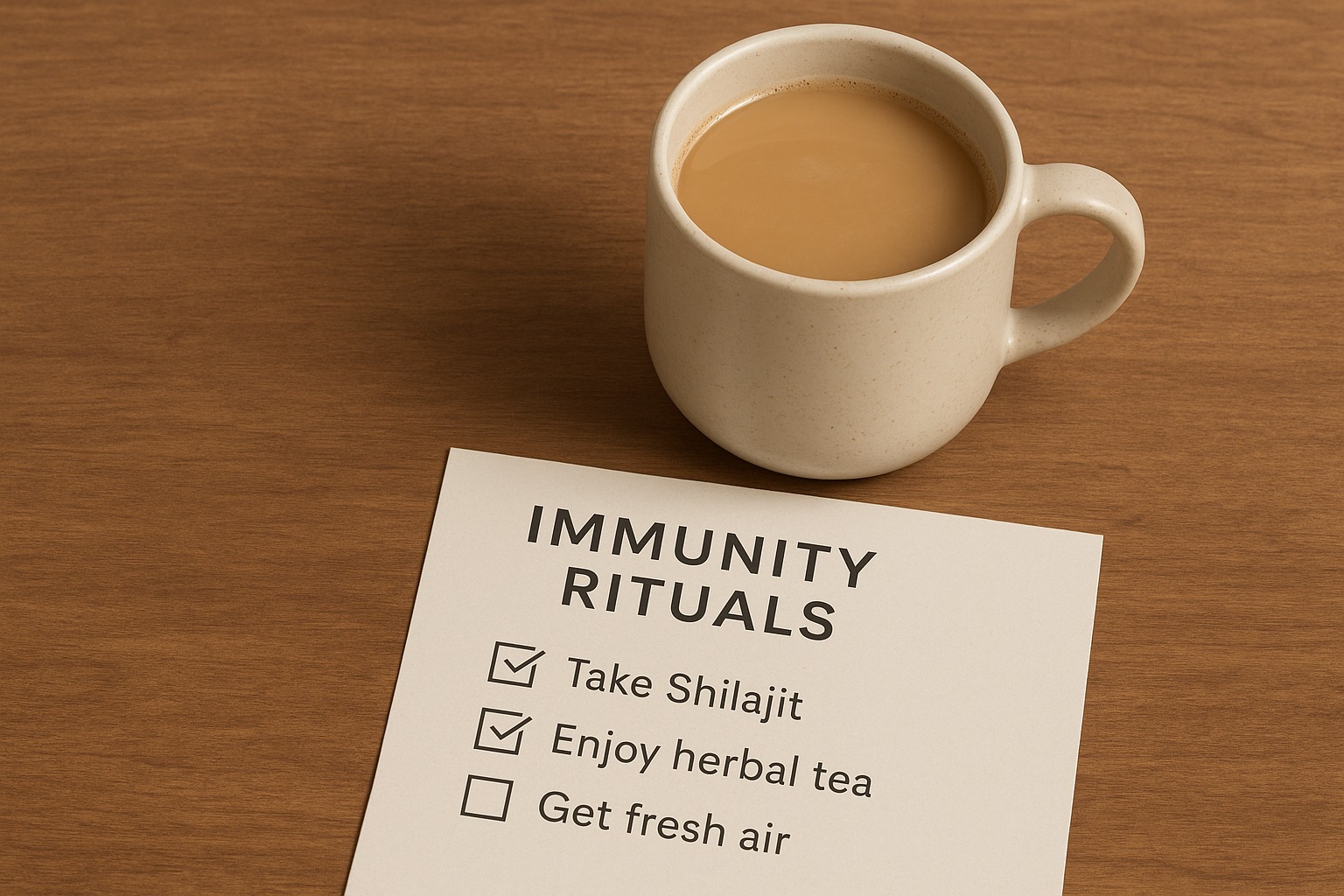
- As a small, optional ritual that reminds you to drink a warm, non-sugary beverage.
- As a symbol of taking care of yourself, on top of the fundamentals.
- As one of several tools that you review periodically with your clinician.
No supplement, including Shilajit, can make up for chronic sleep loss, unmanaged stress, or ignoring medical advice.
Who Should Be Cautious or Avoid Shilajit for Immune Concerns
Because immunity touches so many serious conditions, some people should be especially careful with new supplements.
Groups Often Advised to Seek Medical Input First
- People with autoimmune conditions or immune deficiencies.
- Those on immunosuppressant drugs, steroids, or chemotherapy.
- Individuals with chronic infections or serious long-term illnesses.
- Pregnant, trying to conceive, or breastfeeding individuals.
- Children and teenagers—immune questions here are pediatric topics.
Better First Steps for These Groups
- Discuss concerns with your primary-care clinician or relevant specialist.
- Ask specifically about supplement interactions and risks.
- Share exact product labels and dosages before starting anything new.
This section is not medical advice and does not replace individualized guidance. Always follow the advice of your own healthcare professionals regarding immune-related conditions and treatments.
Product Labels: Reading “Immune Support” Claims Safely
Shilajit can appear in immune-labeled products in many ways. Label literacy helps you choose more thoughtfully—or decide to pass.
| Label Pattern | Why It Matters |
|---|---|
| “Supports general wellness” + clear disclaimers | More cautious wording often aligns with better regulatory awareness. It frames Shilajit as supportive, not as a drug replacement. |
| Claims to prevent or treat specific diseases | Disease treatment language on a supplement is a regulatory red flag and may suggest poor oversight or exaggerated marketing. |
| Long “immune blend” without clear amounts | Harder to know how much Shilajit you’re getting or how it fits alongside other ingredients and your medications. |
| Batch-specific COAs for heavy metals & microbes | Immune-related customers often plan to take products for a while; clean, tested batches help limit unnecessary exposure risks. |
Authoritative Sources & Research Context
Traditional Ayurvedic texts describe Shilajit as a rasayana (rejuvenator) that may support overall resilience and immunity. Research has examined its bioactive compounds including fulvic acid and their effects on immune function.
Authoritative Sources
-
PubMed Central (PMC) – Complement-fixing Activity of Fulvic Acid from Shilajit.
PMC – Fulvic Acid Activity -
PubMed Central (PMC) – Shilajit: A panacea for high-altitude problems.
PMC – Shilajit High Altitude -
Global Research Online – Shilajit - A Wonder Drug of Ayurveda: An Overview.
Global Research – Shilajit Overview -
ScienceDirect – Review on shilajit used in traditional Indian medicine.
ScienceDirect – Shilajit Traditional
This section is for general informational purposes only and is not a substitute for professional medical advice.
FAQs: Shilajit for Immunity & Resilience
Does Shilajit “boost” your immune system?
Can Shilajit prevent colds, flu, or other infections?
Is Shilajit safe if I have an autoimmune condition?
Can I give Shilajit to my child to support their immunity?
Should I take more Shilajit when I feel like I’m getting sick?
How long should I try Shilajit to see if it affects my resilience?
Continue Learning About Shilajit
Let Immune Decisions Be Led by Science, Not Hype
If you choose to explore Shilajit for immunity or resilience, let it be a small, optional piece of a plan centered on sleep, nutrition, stress care, and evidence-based medical guidance. A clean, lab-tested product can be part of that story—but it should never be the main character.
Explore Purified, Lab-Tested Shilajit ResinThis page is for educational purposes only and is not intended to diagnose, treat, cure, or prevent any disease. These statements have not been evaluated by the FDA. Always consult a qualified healthcare professional before using any supplement or changing your health routine, especially for immune-related concerns.
About This Immunity & Resilience Guide
Herbs Mill Editorial Team
The Herbs Mill team focuses on calm, compliance-first education about traditional resins like Shilajit. Our goal is to help you place supplements in the right order—after conversations with your healthcare professionals, and after the everyday habits that most strongly influence how your immune system functions over time.