
Shilajit Dosage: Safe Portion Guide (Non-Medical)
Search “Shilajit dosage” and you’ll see aggressive numbers and bold promises. This page takes a slower route. Instead of prescribing exact doses, it explains how people typically portion Shilajit resin, why most start with tiny amounts, and how to involve your doctor before making it part of your routine. No medical claims—just practical, safety-first guidance.
Quick Overview: How Much Shilajit Do People Use?
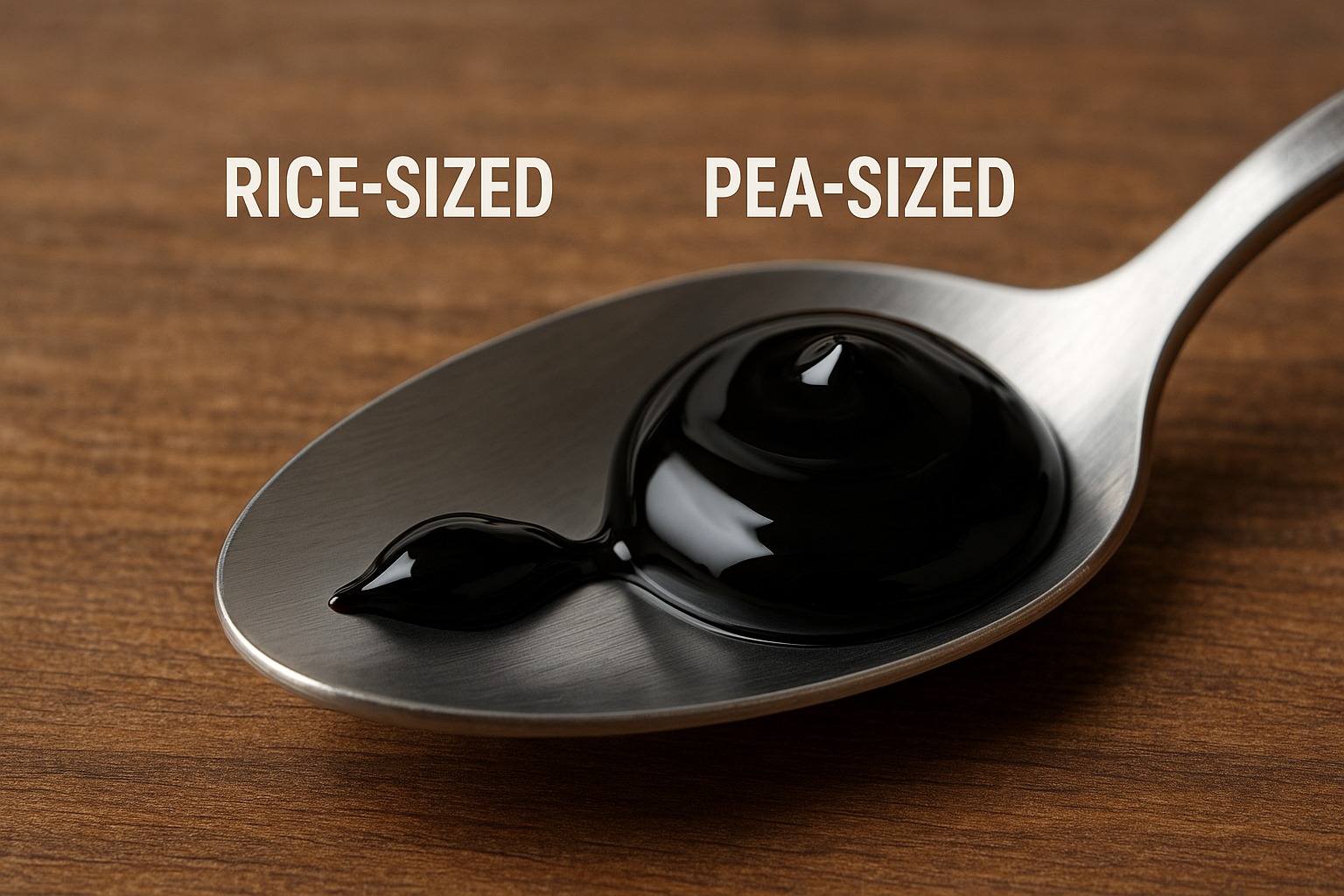
Most adults who use Shilajit resin talk in visual portions, not milligrams: a rice-grain-sized amount, a pea-sized amount, or something in between. Typical patterns:
- Start very small—often about a rice-grain-sized portion of resin
- Dissolve in warm water, milk, or tea until fully mixed
- Use once a day or a few times per week, not constantly increasing
- Adjust slowly, if at all, based on comfort and professional advice
Why We Say “Portion” and Not “Dose”
The word “dose” often implies a drug-like effect or medical prescription. Shilajit is a traditional resin, not a medication, and different people can have very different responses to the same amount.
Using “portion” helps keep expectations realistic
- Reminds you this is a personal experiment, not a prescription
- Encourages you to start smaller and pay attention
- Fits how people actually measure resin in daily life (by sight, not scales)
Why hard dosing rules are risky
- Everyone’s health history, organs, and medications are different
- Unseen issues (kidneys, liver, blood pressure) can change risk
- What works for a stranger online may not be safe for you
Visual Portion Guide for Shilajit Resin
Many people don’t own milligram scales. That’s why Shilajit resin is often discussed in simple visual terms. These are descriptions, not prescriptions.
| Visual portion | How people describe it |
|---|---|
| “Rice-grain-sized” portion | Common starting point for many adults who are new to Shilajit. A tiny strand or bead of resin about the size of an uncooked grain of rice, dissolved fully in warm liquid. |
| “Half-pea-sized” portion | Sometimes used after someone is comfortable with smaller portions and has not noticed unwanted effects, always within product-label suggestions and professional advice. |
| “Pea-sized” portion | Often mentioned in marketing, but not necessary—or appropriate—for everyone. A pea-sized portion is a larger amount and should not be assumed safe for all users. |
| Multiple daily portions | Higher-frequency use increases overall exposure. Combining this with large portions or other supplements makes professional guidance even more important. |
Key idea: If you ever feel unsure, smaller is safer than bigger, and “less often” is safer than “more often”—until a clinician tells you otherwise.
How Often Do People Typically Use Shilajit?
There is no universal schedule. That said, when people describe their real-world patterns (not medical protocols), a few common rhythms show up:
Common Non-Medical Patterns
- Once daily in the morning as part of a warm drink ritual
- A few times per week instead of every single day
- Short “trial periods” while tracking how they feel
- Planned breaks rather than continuous use all year
Patterns That Can Increase Risk
- Taking very large portions multiple times per day
- Layering Shilajit with many other new supplements at once
- Using it instead of seeing a doctor about health concerns
- Continuing use despite worrying side effects
For more on safety, see Is Shilajit Safe? and Shilajit Side Effects & Safety.
How to Start Small & Build Carefully
If you and your clinician decide that Shilajit is appropriate for you, this is a common way people keep their first weeks gentle and information-rich.
- Confirm with a professional that Shilajit is reasonable given your history and medications.
- Choose one purified, tested resin instead of jumping between brands or forms.
- Begin with a small portion (for example, roughly rice-grain-sized) once per day, or less often if advised.
- Dissolve completely in warm (not boiling) liquid—stir until no visible clumps remain.
- Track basic signals for at least 1–2 weeks: digestion, sleep, skin, mood, and energy.
- Do not increase the portion just because you don’t notice something obvious right away.
- Review any changes or concerns with your clinician before adjusting amount or frequency.
Listening to Your Body: When Portion Might Be Too Much
Self-awareness is one of the most important “tools” in any supplement routine. If your body doesn’t feel okay, the right answer is to pause and get help—not to push through.
Milder Signs to Reconsider Your Portion
- New digestive discomfort or nausea after starting
- Noticeable changes in bowel habits
- Headaches, restlessness, or difficulty falling asleep
- Feeling “off” in a way you can’t explain
Red-Flag Signs to Stop & Seek Help
- Rash, itching, swelling, or difficulty breathing
- Severe or persistent abdominal pain
- Dark urine, yellowing skin or eyes, or extreme fatigue
- Any symptom that feels serious, unusual, or rapidly worsening
If you notice red-flag symptoms, stop Shilajit and seek medical care promptly.
Who Must Talk to a Doctor Before Any Shilajit Portion
Some people have higher risk when using concentrated natural products. For them, professional guidance is not optional; it’s essential.
High-Priority Groups
- People who are pregnant, may be pregnant, or are breastfeeding
- Anyone trying to conceive (any partner)
- Children and teenagers
- People with kidney, liver, or serious heart conditions
- Those with a history of heavy-metal issues
Also: People With Complex Health Pictures
- Multiple prescriptions or complex treatment plans
- Hormone-related conditions under specialist care
- Autoimmune conditions or chronic illnesses
- Known sensitivity to supplements or herbs
Label Suggestions vs Your Reality
Product labels usually show a general serving suggestion. That doesn’t mean it’s automatically right for you.
What Labels Usually Provide
- A suggested serving (“X times per day”)
- Sometimes a rough amount in milligrams
- Basic warnings (pregnancy, children, etc.)
Questions to Ask Yourself
- “Does my doctor agree this serving is reasonable for me?”
- “Have I tried a smaller portion first?”
- “Do I understand how this fits with my other supplements?”
- “Am I comfortable stopping if I feel off?”
Common Mistakes People Make With Shilajit “Dosage”
Learning from others’ missteps can make your own experience safer and calmer.
Frequent Missteps
- Starting with large, daily portions because an influencer said so
- Using Shilajit alongside several new supplements at once
- Ignoring label warnings or personal medical advice
- Taking extra portions when feeling stressed or tired
- Continuing to increase portions over time without reason
Better Alternatives
- Begin small, go slow, and stay curious—not aggressive
- Change one thing at a time so you can see what matters
- Check in with a clinician before and during your experiment
- Let sleep, food, movement, and stress management carry the weight
Questions to Ask Your Clinician About Shilajit Dosage
You don’t need to convince your doctor to “endorse” Shilajit. Your goal is simply to check how it fits into your overall health picture.
What to Bring
- Photos of the product label (front, ingredients, testing claims)
- A list of your medications and other supplements
- Any symptoms or concerns you’ve noticed since starting (if you already began)
- Your planned portion size and how often you want to use it
Questions You Might Ask
- “Given my history, is Shilajit appropriate at all?”
- “If yes, what portion and frequency would you be comfortable with?”
- “Are there warning signs where you’d want me to stop right away?”
- “Should we do any labs or follow-ups if I use this over time?”
Authoritative Sources & Research Context
Proper dosing of Shilajit is essential for safety and effectiveness. Clinical studies have examined various dosing protocols to establish safe usage guidelines.
Authoritative Sources
-
National Library of Medicine (NLM) – PubMed – Safety and efficacy of shilajit (mumie, moomiyo).
PubMed – Shilajit Safety Efficacy -
PubMed Central (PMC) – Evaluation of safety profile of black shilajit after 91 days repeated administration.
PMC – Shilajit Long-term Safety -
Wiley Phytotherapy Research – Safety and Efficacy of Shilajit (Mumie, Moomiyo).
Phytotherapy Research – Shilajit Safety -
Journal of Population Therapeutics & Clinical Pharmacology – Systematic Review: Clinical Efficacy and Safety.
JPTCP – Shilajit Systematic Review -
International Journal of Basic & Clinical Pharmacology – Clinical Studies and Safety Evidence.
IJBCP – Shilajit Clinical Studies -
Examine.com – Shilajit Evidence-Based Review with dosing protocols.
Examine.com – Shilajit Dosing
This section is for general informational purposes only and is not a substitute for professional medical advice.
FAQs: Shilajit Dosage & Portions
What is a normal Shilajit dosage?
Can I take Shilajit twice a day?
Is more Shilajit better?
Can I measure Shilajit on a scale instead of by sight?
How long should I use Shilajit before deciding if it’s worth it?
Is it okay to give adult-sized portions of Shilajit to children?
What if I took more Shilajit than I meant to?
Continue Learning About Shilajit
About This Portion Guide
Herbs Mill Research & Education Team
The Herbs Mill team focuses on compliance-first education about traditional resins like Shilajit. We emphasize portion-based, safety-focused guidance so readers can make calmer, more informed decisions with their healthcare professionals.