
Shilajit Price & Value Comparison: Paying for What Matters
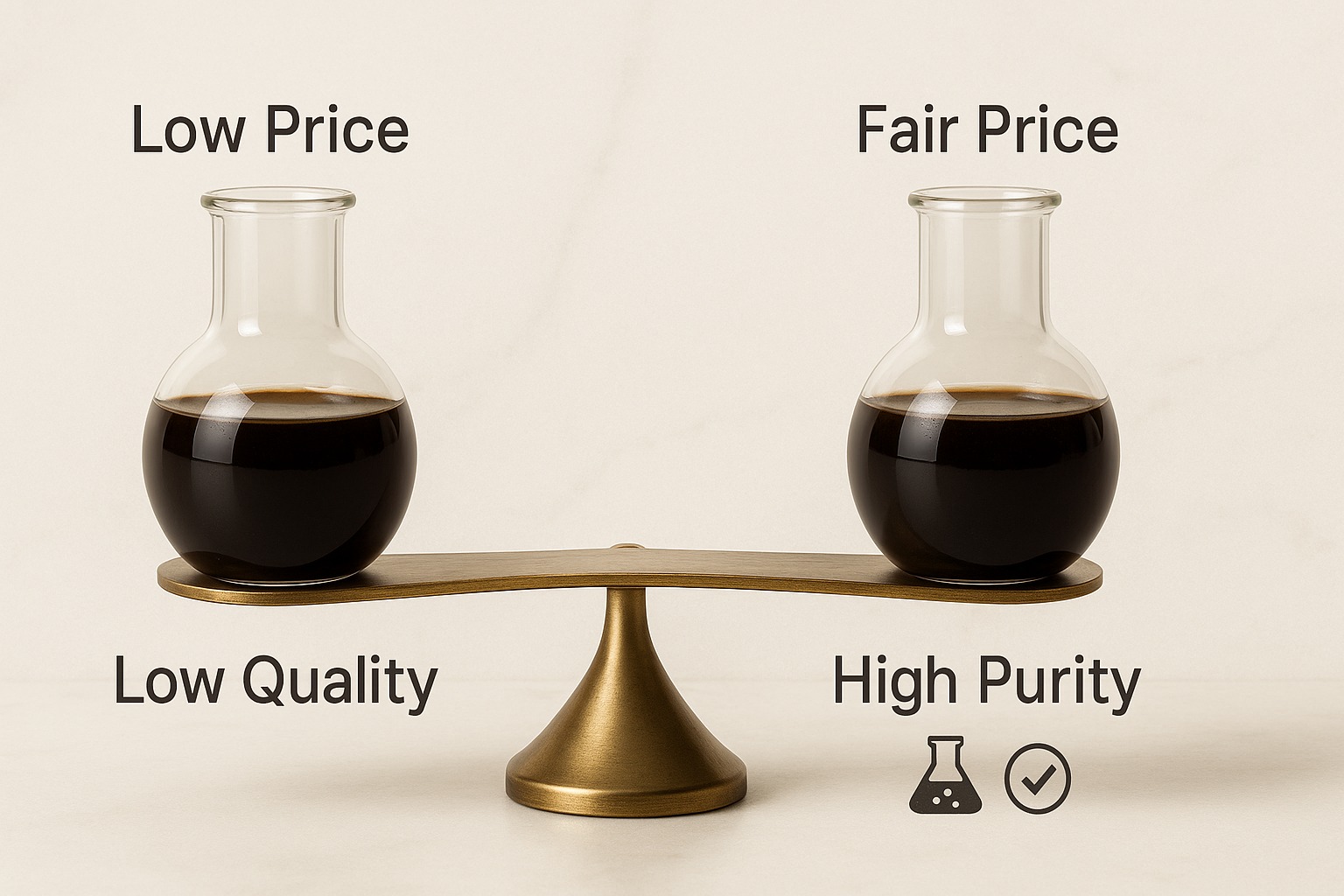
Shilajit prices can range widely—from very cheap powders to premium resin jars. Instead of guessing, this guide shows you how to compare products by serving, quality, and transparency so you can decide what “value” means for you.
Why Shilajit prices vary so much
Shilajit is not a single standardized commodity. Price reflects origin, form (resin vs capsules vs gummies), purification, and how seriously a brand invests in testing. Marketing and packaging can also raise or lower the final number.
- Authentic sourcing and purification cost more than shortcuts.
- Thorough lab testing adds cost but also adds safety.
- Different forms (resin vs gummies) come with different manufacturing expenses.
Key price drivers in Shilajit products
1. Origin & sourcing
- Himalayan or clearly stated mountain origin can cost more than generic “mountain resin.”
- Ethical sourcing and smaller, traceable batches tend to be priced higher.
2. Form & processing
- Resin: Often positioned as the closest to traditional form; requires careful purification.
- Capsules / powders: Add encapsulation or blending steps.
- Gummies: Require extra ingredients, flavors, and processing.
3. Testing & certification
- Multi-panel testing (heavy metals, microbials, identity) adds lab costs.
- Third-party testing and certifications (where used) can raise the price.
4. Branding & packaging
- Premium jars, design, and marketing campaigns affect final price.
- Some brands keep packaging simple and invest more in testing instead.
Price per serving: simple Shilajit math
One of the easiest ways to compare value is to calculate approximate price per serving, not just price per jar. Here’s a simple, label-based approach (no exact numbers needed):
- Find the jar price.
- Check the label for servings per container.
- Divide price by number of servings to get estimated cost per serving.
| Scenario | What you see | What it may mean |
|---|---|---|
| Jar A: Higher price, many servings | Looks expensive at first glance, but label shows a lot of servings. | Cost per serving might actually be moderate or good. |
| Jar B: Low price, few servings | Looks cheap, but there are only a small number of servings inside. | Cost per serving can be similar to—or higher than—Jar A. |
| Jar C: Blends with fillers | Low price, large serving count, but Shilajit is mixed with other ingredients. | True Shilajit content per serving may be lower than it appears. |
Shilajit value checklist (before you buy)
Use this checklist to combine price, safety, and practical realities into one decision:
- ✅ I can see or request a batch-specific COA for this product.
- ✅ The origin is clearly stated (e.g., Himalayan regions), not just “mountain resin.”
- ✅ The serving size and servings per container are easy to understand.
- ✅ Marketing language is realistic—no cures, no promises.
- ✅ The price per serving feels fair for the level of transparency and testing.
- ✅ I know how and when I would take it in my routine.
Authoritative Sources & Research Context
Understanding what makes quality Shilajit helps evaluate whether pricing reflects genuine product value. Scientific markers help assess quality-to-price ratios.
Authoritative Sources
-
National Library of Medicine (NLM) – PubMed – A Comprehensive Review on Shilajit: What We Know about Its Chemical Composition.
PubMed – Shilajit Composition -
ACS Omega – Chemical Analysis of Native Himalayan Shilajit.
ACS Omega – Shilajit Chemistry -
PubMed Central (PMC) – Evaluation of safety profile of black shilajit after 91 days.
PMC – Shilajit Safety -
Examine.com – Shilajit Evidence-Based Review.
Examine.com – Shilajit
This section is for general informational purposes only and is not a substitute for professional medical advice.
FAQs
Is expensive Shilajit always better?
Should I avoid cheap Shilajit completely?
What’s more important: price or testing?
Continue Learning About Shilajit
Next steps
If you’re comparing Shilajit options, do the quick math on servings, skim the COA, and listen to your instincts about brand honesty. A calm, informed choice will always feel better than a rushed bargain.
Shilajit reviews: what customers say Where to buy ShilajitThese statements have not been evaluated by the FDA. Not intended to diagnose, treat, cure, or prevent any disease. Consult a healthcare professional before use.