
Shilajit Side Effects & Safety: Risks, Precautions & Red Flags
Looking for “Shilajit side effects”? This guide covers safety with clarity—no hype, no misleading medical claims. Any substance that can affect how you feel can also carry risk. Shilajit is often marketed as “all natural” and completely safe—but that’s only part of the story. This guide walks through possible side effects, who should be cautious or avoid Shilajit, how product quality changes the safety picture, and when to talk with a healthcare professional. It is educational only and not medical advice.
Quick Summary: Shilajit Side Effects & Safety
Shilajit is a traditional, mineral-rich resin. Many adults tolerate purified products well at modest servings—but side effects can still happen, especially with poor-quality sources, high doses, or underlying health conditions. The main safety risks come from contaminants (like heavy metals or microbes), taking too much, interactions with medications, and using Shilajit in place of needed medical care.
- “Natural” does not mean “risk-free” for everyone
- Quality and purification strongly affect safety
- Some people notice mild digestive or energy changes
- Those with medical conditions or on medication must involve a clinician
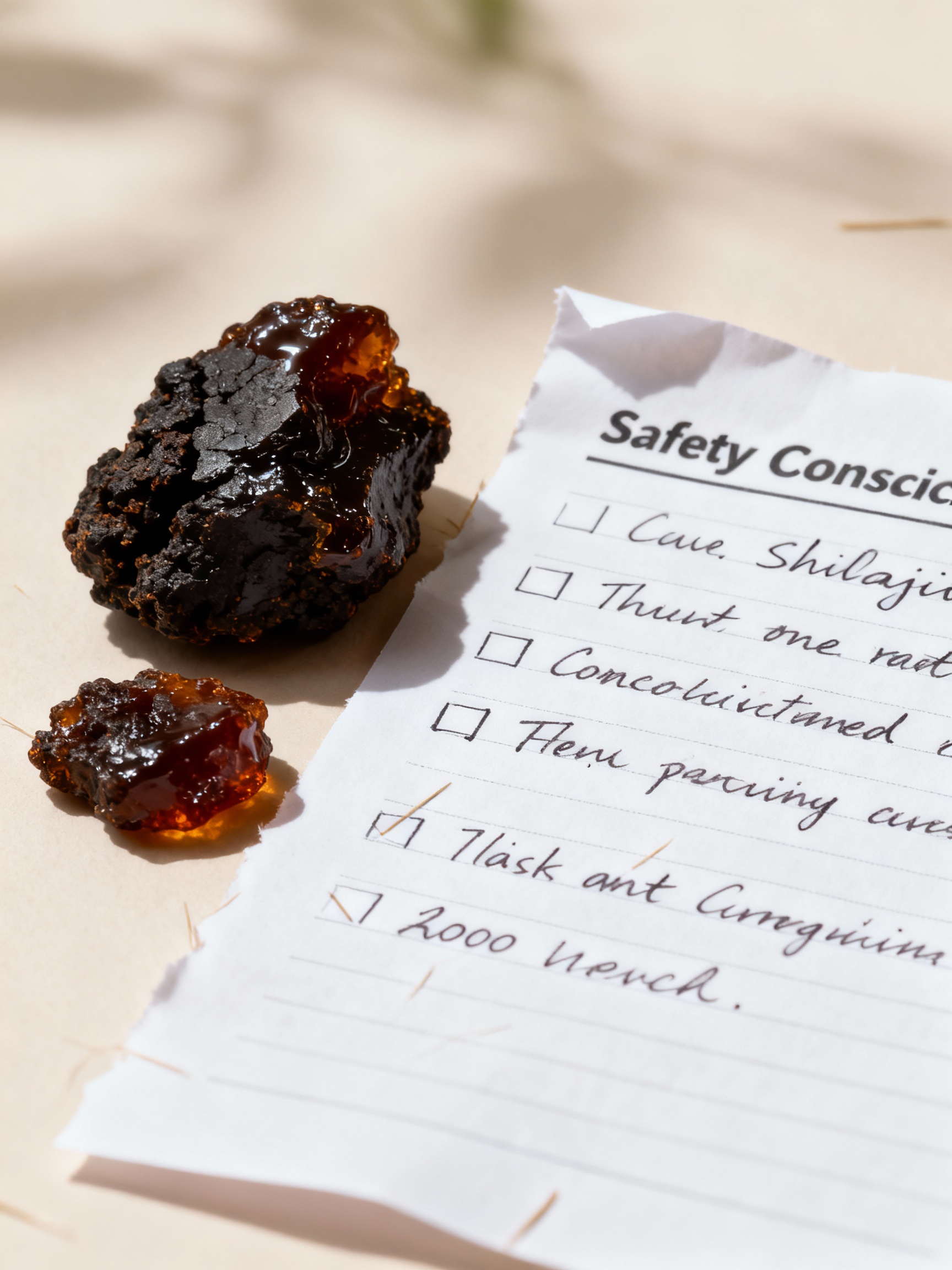
Safety Overview in Plain Language
Compared with many drugs, appropriately purified Shilajit is often considered relatively well-tolerated in healthy adults. But that doesn’t mean it’s suitable for everyone, or that any product sold as “Shilajit” is automatically safe.
What’s generally true
- Purified resin used at modest servings is the most traditional approach
- Serious side effects appear uncommon in healthy adults using quality products
- Minor digestive or energy changes are more frequently described
What people often overlook
- Not all “Shilajit” is properly purified or tested
- Raw or poorly processed material can contain heavy metals and contaminants
- Underlying health conditions and medications change the safety picture
- Using Shilajit instead of medical care can delay important diagnoses
Possible Mild Side Experiences
People respond differently to any supplement. Some describe no noticeable effect at all; others report subtle changes, and a smaller group reports side effects even at modest servings. The list below is based on user reports and general supplement safety patterns—not a guarantee of what you personally will or won’t feel.
Commonly reported, usually mild
- Temporary digestive changes (loose stool, mild cramping, or nausea)
- Changes in appetite (slightly more or less hungry)
- Feeling slightly “wired” or unusually energized
- Headache or a “heavy” feeling when starting
Why these can happen
- Sensitivity to concentrated mineral and fulvic components
- Starting with more than your body is comfortable with
- Taking on an empty stomach when you’re not used to it
- Combining Shilajit with multiple other new supplements at once
Mild, short-lived symptoms may settle when people lower their serving size or take Shilajit with food—but any persistent or worrying effect is a reason to pause and speak with a clinician.
Serious Risks & Red Flags (Do Not Ignore)
While serious reactions appear uncommon with reputable products, they are possible—especially if Shilajit is contaminated, misused, or taken by someone with vulnerable health. The following are examples of situations where medical attention is important.
Potential serious concerns
- Signs of allergic reaction (rash, swelling, difficulty breathing)
- Strong or persistent abdominal pain, vomiting, or diarrhea
- Unusual changes in urine color, swelling in legs/feet, or severe fatigue
- Sudden changes in mood, confusion, or feeling “not like yourself”
- Chest pain, shortness of breath, or severe headache
Immediate steps if these occur
- Stop taking Shilajit right away
- Seek medical care urgently for serious or rapidly worsening symptoms
- Bring the product, label, and a list of other supplements/medications
- Let your healthcare team decide if and when you should restart (if at all)
Never push through severe symptoms because something is “natural.” Safety comes first.
Who Should Avoid or Be Extra Cautious with Shilajit
Some people are more vulnerable to side effects or interactions. For them, Shilajit may be inappropriate or should only be considered with explicit medical guidance.
Groups that should generally avoid Shilajit unless clearly approved by a clinician
- Pregnant people, those trying to conceive, or breastfeeding parents
- Children and teenagers (most products are for adults only)
- People with significant kidney or liver disease
- People with known heavy metal issues or environmental toxin exposure
- Anyone with past severe reactions to supplements
Groups needing individual risk–benefit discussion
- People on multiple prescription medications
- Those with heart or blood pressure conditions
- Individuals with hormone-related conditions or cancers
- People under evaluation for unexplained fatigue, weight change, or pain
In these situations, Shilajit should never be started casually. A clinician who knows your history is the best person to help you decide.
Interactions, Lab Tests & Other Supplements
Research on specific drug–Shilajit interactions is limited, but that doesn’t mean interactions can’t happen. Shilajit products vary in mineral content and other natural compounds, which may affect how your body handles medications or lab tests.
Potential interaction areas
- Medications that affect the kidneys or liver
- Drugs with narrow therapeutic windows (where small changes matter)
- Blood pressure or heart medications
- Hormone therapies and thyroid medications
- Other supplements with overlapping “energy” or “performance” claims
Lab test considerations
- Some clinicians prefer patients pause supplements before lab work
- Bringing a list of supplements helps interpret results correctly
- Always follow your clinician’s instructions about what to hold before tests
A simple rule: the more medications and supplements you take, the more essential it is to keep your healthcare team informed about Shilajit or any new product.
How Product Quality Affects Side-Effect Risk
Shilajit is collected from mountain rocks and must be purified. If this process is rushed or skipped, unwanted contaminants can remain. Choosing better products is one of the strongest levers you have for lowering risk.
| Quality factor | Why it matters for safety |
|---|---|
| Source & origin transparency | Brands that share sourcing details are more likely to have traceability and oversight. |
| Purification method | Proper dissolution, filtration, and low-heat concentration help remove grit and impurities. |
| Third-party testing | Independent lab checks for heavy metals, microbes, and other contaminants are a key safety layer. |
| Form & additives | Single-ingredient resin and simple formulas reduce the risk of reacting to added fillers, flavors, or sweeteners. |
| Marketing style | Brands that avoid miracle claims and focus on education are often more serious about compliance and safety. |
For help recognizing authentic products, see How to Identify Pure Shilajit.
How to Start Shilajit as Safely as Possible
If you and your healthcare professional decide that a Shilajit trial makes sense, a cautious, structured approach helps you spot side effects early.
- Share your full list. Tell your clinician about all medications, supplements, and over-the-counter products you use.
- Choose a quality product. Look for purified resin or simple capsules with clear testing information.
- Start low. Begin at the lower end of the label’s serving suggestion (or lower, if advised) rather than jumping to the maximum.
- Introduce one new thing at a time. Avoid starting multiple new supplements in the same week.
- Keep a simple log. Note when you take Shilajit and any changes in digestion, sleep, mood, or energy.
- Review regularly. Revisit the decision with your clinician after several weeks or sooner if side effects appear.
For practical usage steps, see How to Take Shilajit.
When to Stop Shilajit & Seek Medical Help
Knowing when not to keep going is a big part of safe supplement use. Consider stopping and seeking professional advice if:
Signals to pause immediately
- New or worsening digestive pain, vomiting, or persistent diarrhea
- Rash, itching, swelling, or trouble breathing
- Marked changes in mood, sleep, or thinking that concern you
- Any symptom that feels sudden, severe, or frightening
Signals to discuss soon with your clinician
- You feel consistently worse after starting Shilajit
- You need to keep increasing the amount to feel any effect
- You are tempted to skip or reduce prescribed medications
- You’re not sure whether Shilajit is helping enough to justify using it
When in doubt, it’s safer to stop and check in than to push through just because something is marketed as natural or traditional.
Authoritative Sources & Research Context
Understanding potential side effects is important before using any supplement. Clinical research has documented the safety profile of purified Shilajit.
Authoritative Sources
-
National Library of Medicine (NLM) – PubMed – Safety and efficacy of shilajit (mumie, moomiyo).
PubMed – Shilajit Safety -
PubMed Central (PMC) – Evaluation of safety profile of black shilajit after 91 days.
PMC – Shilajit Long-term Safety
This section is for general informational purposes only and is not a substitute for professional medical advice.
FAQs: Shilajit Side Effects & Safety
Is Shilajit safe for long-term use?
Can Shilajit damage the kidneys or liver?
Are heavy metals a real concern with Shilajit?
Is Shilajit safer in resin form than in capsules or gummies?
Can I take Shilajit if I’m on prescription medication?
What’s safer: taking more for a shorter time, or less for longer?
Continue Learning About Shilajit
Making Safety the First “Benefit”
The most valuable “benefit” of any wellness product is that it fits safely into your life. If you decide to explore Shilajit, let safety lead: choose purified, transparently tested products, keep your clinician in the loop, and be willing to stop if something doesn’t feel right.
Explore Purified Shilajit ResinThis page is for educational purposes only and is not intended to diagnose, treat, cure, or prevent any disease. These statements have not been evaluated by the FDA. Always consult a qualified healthcare professional before using any supplement or changing your health routine.
About This Guide
Herbs Mill Research & Education Team
Herbs Mill focuses on clear, compliance-first education about traditional resins like Shilajit. Our aim is to balance curiosity with caution so you can have informed conversations with your healthcare professional about what belongs in your routine—and what does not.