
Shilajit vs Alternatives: A Calm, Label-Smart Comparison
Shilajit is known in traditional wellness systems for supporting balance and vitality. Here’s how it compares with popular alternatives in a practical, label-focused way—so you can pick what fits your routine. No hype, just clear differences in origin, format, and what to look for on the label.
Quick overview
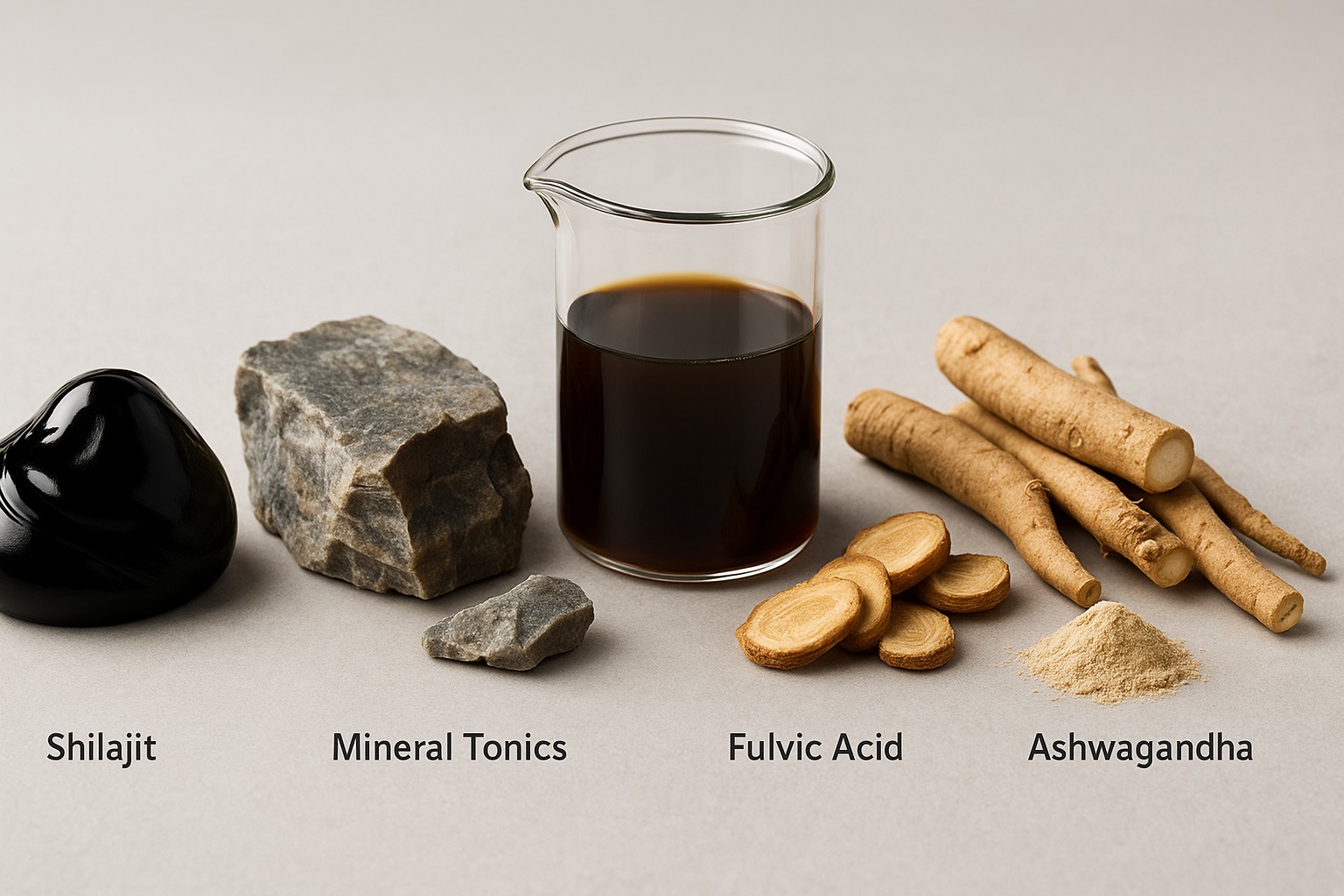
| Option | What it is | Tradition | Typical formats | Label checks |
|---|---|---|---|---|
| Shilajit | Natural mineral-rich resin with naturally occurring fulvic components and trace minerals. | Ayurveda (Rasayana) | Resin, capsules, powder, gummies | Batch COA, origin, mg per serving, storage notes |
| Ashwagandha | Root of Withania somnifera, often provided as standardized extract. | Ayurveda (adaptogenic herb) | Capsules, powder, gummies, liquid | Extract %/standardization, mg per serving, named extract type |
| Ginseng | Roots (e.g., Panax, American ginseng) with ginsenosides discussed in research. | East Asian/Herbal traditions | Capsules, tea, liquids | Species, ginsenoside %, mg per serving, sourcing |
| Fulvic Acid Supps | Supplements focusing on isolated fulvic/humic fractions. | Modern nutraceutical framing | Liquids, powders, capsules | Source geology, concentration, contaminant testing |
| Multimineral Tonics | Blends designed to cover trace minerals. | Modern nutrition | Liquids, capsules, powders | Mineral panel, bioavailability, heavy metals testing |
Shilajit vs Ashwagandha
Core difference: Shilajit is a mineral-rich resin; ashwagandha is an herbal root. Many people use them at different times of day or for different routine goals.
- Label focus: For Shilajit—origin, fulvic-related profile, mg per serving, batch COA. For ashwagandha—extract type/standardization and milligrams per serving.
- Formats: Shilajit resin vs ashwagandha capsules or powders are most common.
- Stacking: Some combine both; if you do, introduce one at a time and track how you feel.
Shilajit vs Ginseng
Core difference: Ginseng is plant-based with ginsenosides discussed in research; Shilajit is mineral-based with humic/fulvic components and trace minerals.
- Label focus: For ginseng—species (Panax vs American), ginsenoside %, and mg per serving. For Shilajit—COA access, origin, and clearly stated serving size.
- Use patterns: People often take ginseng in the daytime; Shilajit timing varies by routine and preference.
Shilajit vs Fulvic Acid Supplements
Core difference: Shilajit is a whole natural resin that naturally includes fulvic components plus trace minerals; fulvic products focus on an isolated fraction.
- Label focus: For fulvic products—source geology, concentration, and contaminant testing. For Shilajit—batch COA that matches your jar or lot and clear identity as resin, not just “fulvic.”
- Taste/format: Fulvic is often in liquids; Shilajit is commonly in resin or capsule form.
Shilajit vs Multimineral Tonics
Core difference: Multimineral tonics blend a wider panel of minerals; Shilajit offers naturally occurring trace minerals within a resin matrix.
- Label focus: For multimineral products—full mineral list, forms (such as chelates), and heavy metals testing. For Shilajit—origin, mg per serving, and honest description as a traditional resin.
- When people choose each: Those seeking broad mineral coverage may look at multimineral formulas; those interested in a traditional resin may focus on Shilajit.
How to choose for your routine
- Decide on format first (resin, capsule, powder, gummy, liquid).
- Compare actual active mg per serving, not just total blend weight.
- Look for batch-specific COA, origin statements, and clear lot numbers.
- Start low, keep timing consistent for 1–2 weeks, and write down simple notes.
Authoritative Sources & Research Context
Understanding how Shilajit compares to other supplements helps consumers make informed decisions based on their wellness goals.
Authoritative Sources
-
National Library of Medicine (NLM) – PubMed – Shilajit: a review.
PubMed – Shilajit Review -
PubMed Central (PMC) – Shilajit: A Natural Phytocomplex with Potential Procognitive Activity.
PMC – Shilajit Phytocomplex -
ScienceDirect – Review on shilajit used in traditional Indian medicine.
ScienceDirect – Shilajit Traditional -
Global Research Online – Shilajit - A Wonder Drug of Ayurveda: An Overview.
Global Research – Shilajit Ayurveda -
Examine.com – Shilajit Evidence-Based Review.
Examine.com – Shilajit
This section is for general informational purposes only and is not a substitute for professional medical advice.
FAQs
Can I combine Shilajit with other supplements?
Is resin better than capsules?
What’s the simplest way to compare brands?
Continue Learning About Shilajit
Next steps
If Shilajit fits your routine, choose a COA-backed jar and build a steady habit. If it doesn’t, use this comparison to evaluate other options calmly and clearly.
Dosage guide Best time to takeThese statements have not been evaluated by the FDA. This page is for educational purposes only and is not intended to diagnose, treat, cure, or prevent any disease. Consult a healthcare professional before use.