
Shilajit with Ashwagandha: Ayurvedic Synergy
Shilajit and ashwagandha are long-used Ayurvedic ingredients traditionally valued for general vitality and stress support. This guide looks at how people think about them together today—focusing on composition, timing ideas, and safety basics, not medical claims.
Overview
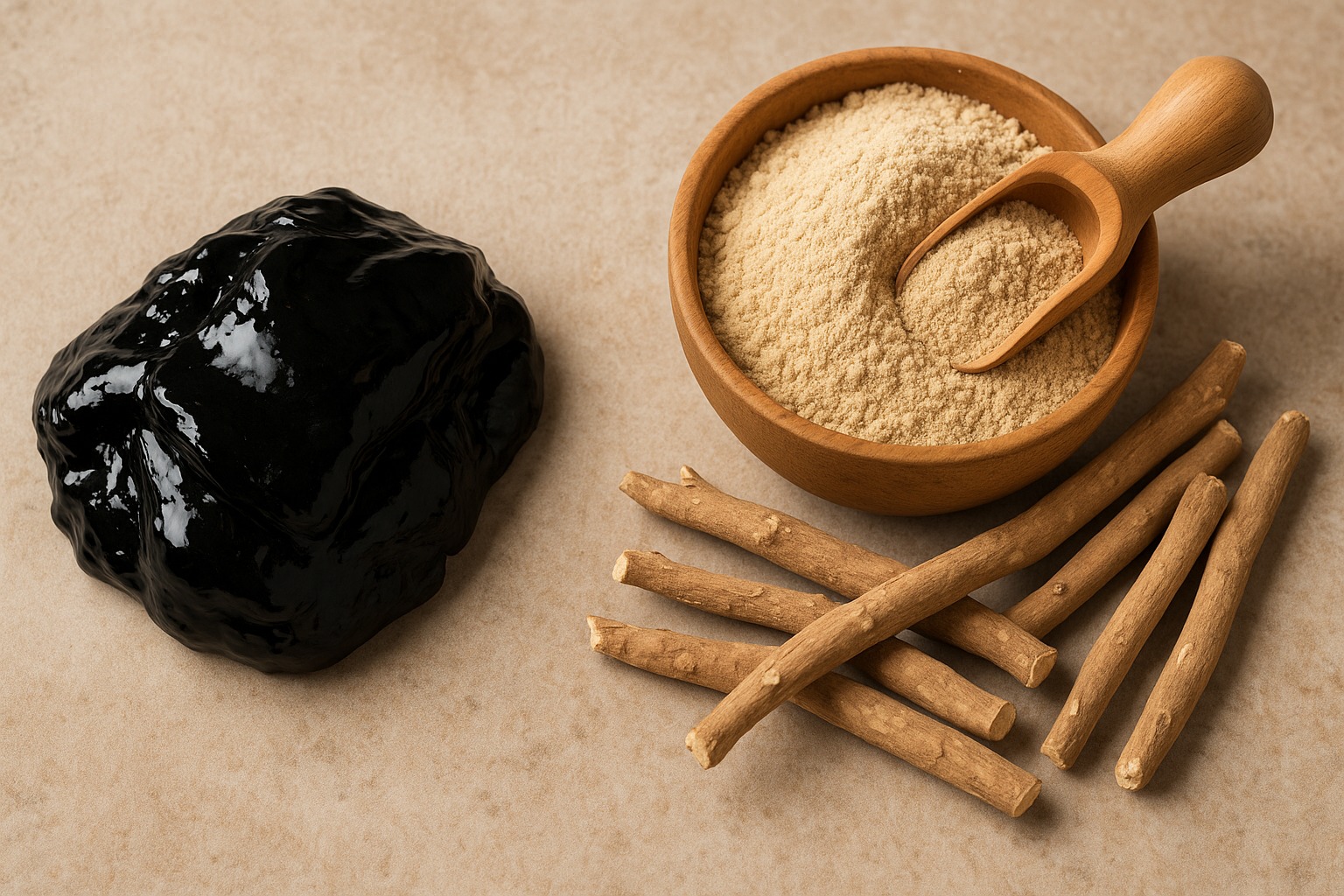
In simple terms, Shilajit is a mineral-rich resin, while ashwagandha is an adaptogenic root. Ayurveda traditionally describes:
- Shilajit as a Rasayana substance associated with strength and resilience.
- Ashwagandha as a herb often used to support steadiness and recovery from everyday strain.
What is Ashwagandha?
Ashwagandha (Withania somnifera) is a root widely used in Ayurveda. It’s often described as a Rasayana herb with adaptogenic properties in modern language—meaning it is traditionally used to help the body cope with everyday stressors.
- Common formats: capsules, powders, gummies.
- Labels may show “root extract” plus a standardization percentage.
- Often taken as part of evening or wind-down routines, depending on guidance.
Ayurvedic view of the Shilajit + Ashwagandha combination
Classical texts often mention combining Rasayana substances and herbs under professional guidance. In modern practice, many people use Shilajit and ashwagandha together as part of a routine focused on balance, recovery, and long-term wellbeing.
- Complementary roles: Shilajit is mineral-focused; ashwagandha is plant-based and adaptogenic in modern terms.
- Lifestyle-centric: Both are usually discussed alongside sleep, nutrition, and stress management—not in isolation.
- Guided use: Traditional use emphasizes individualized guidance based on constitution and current state.
Timing & simple stack examples (non-medical)
People experiment with different timings. Always follow product labels and any advice from your practitioner. Below are illustrative patterns—not prescriptions:
- Example 1: Shilajit resin in warm water after breakfast; ashwagandha capsule later in the day as per label.
- Example 2: Shilajit on active days in the morning; ashwagandha in the evening as part of a wind-down routine.
- Example 3: A combined capsule formula where both are in one serving—used exactly as the label suggests.
Quality & label checks for Shilajit + Ashwagandha
For Shilajit:
- Himalayan origin or clear sourcing statements.
- Batch-specific Certificate of Analysis (COA).
- Transparent serving size (mg per portion).
For ashwagandha:
- Root or root extract clearly listed.
- Standardization details where applicable.
- Serving size and daily amount in mg.
Who should be cautious with this combination?
Even with traditional herbs, context matters. It’s especially important to talk to a qualified professional before combining Shilajit and ashwagandha if you:
- Are pregnant or breastfeeding.
- Have ongoing medical conditions.
- Take prescription medications.
- Have been advised to avoid certain herbs or minerals.
A practitioner who understands both Ayurveda and your medical history can help you decide whether this combination is appropriate for you.
Shilajit side effects & safetyAuthoritative Sources & Research Context
Shilajit and ashwagandha are long-used Ayurvedic ingredients traditionally valued for general vitality and stress support. Their “synergy” is often discussed in holistic wellness, largely because they offer different natural compounds—minerals in Shilajit and adaptogenic phytochemicals in ashwagandha. Modern research continues to explore each ingredient individually, while evidence on combined use remains limited. Understanding their composition, safety considerations, and traditional roles can help provide a grounded perspective.
Authoritative sources
-
National Center for Complementary and Integrative Health (NCCIH) – Evidence summaries on ashwagandha, overall herb safety, and research gaps.
NCCIH – Ashwagandha -
National Institutes of Health Office of Dietary Supplements (NIH ODS) – Reliable guidance on supplement quality, interactions, and evaluating mineral-rich products like Shilajit.
NIH ODS – Dietary Supplements -
Operation Supplement Safety (U.S. DoD) – Overview of Shilajit as a supplement ingredient, including quality concerns and heavy-metal considerations.
OPSS – Shilajit -
Memorial Sloan Kettering Cancer Center (MSKCC) – About Herbs – Evidence-based profiles for ashwagandha and other botanicals, summarizing composition, traditional use, and safety considerations.
MSKCC – About Herbs -
Peer-reviewed Ayurvedic and botanical research – Reviews examining phytochemicals in ashwagandha and humic substances in Shilajit, providing context for their traditional pairing.
Ashwagandha: A Review of Pharmacological Properties – PMC
Safety and Composition of Shilajit – PMC
Educational purposes only; not medical advice.
FAQs
Can I take Shilajit and ashwagandha at the same time?
Is this combo a replacement for medical treatment?
Do I need to cycle on and off?
Continue Learning About Shilajit
Next steps
If you’re exploring Shilajit with ashwagandha, start with education, quality checks, and a routine you can maintain calmly. Build around sleep, nutrition, and realistic expectations.
Shop Pure Himalayan ShilajitThese statements have not been evaluated by the FDA. Not intended to diagnose, treat, cure, or prevent any disease. Consult a healthcare professional before use.