
Shilajit with Sea Moss: Benefits & Comparison
Shilajit and sea moss are both popular in modern wellness. One is a mountain resin, the other a mineral-rich sea vegetable. This guide compares them calmly and shows how some people choose to use them together—without medical claims or hype.
Overview: two different mineral stories
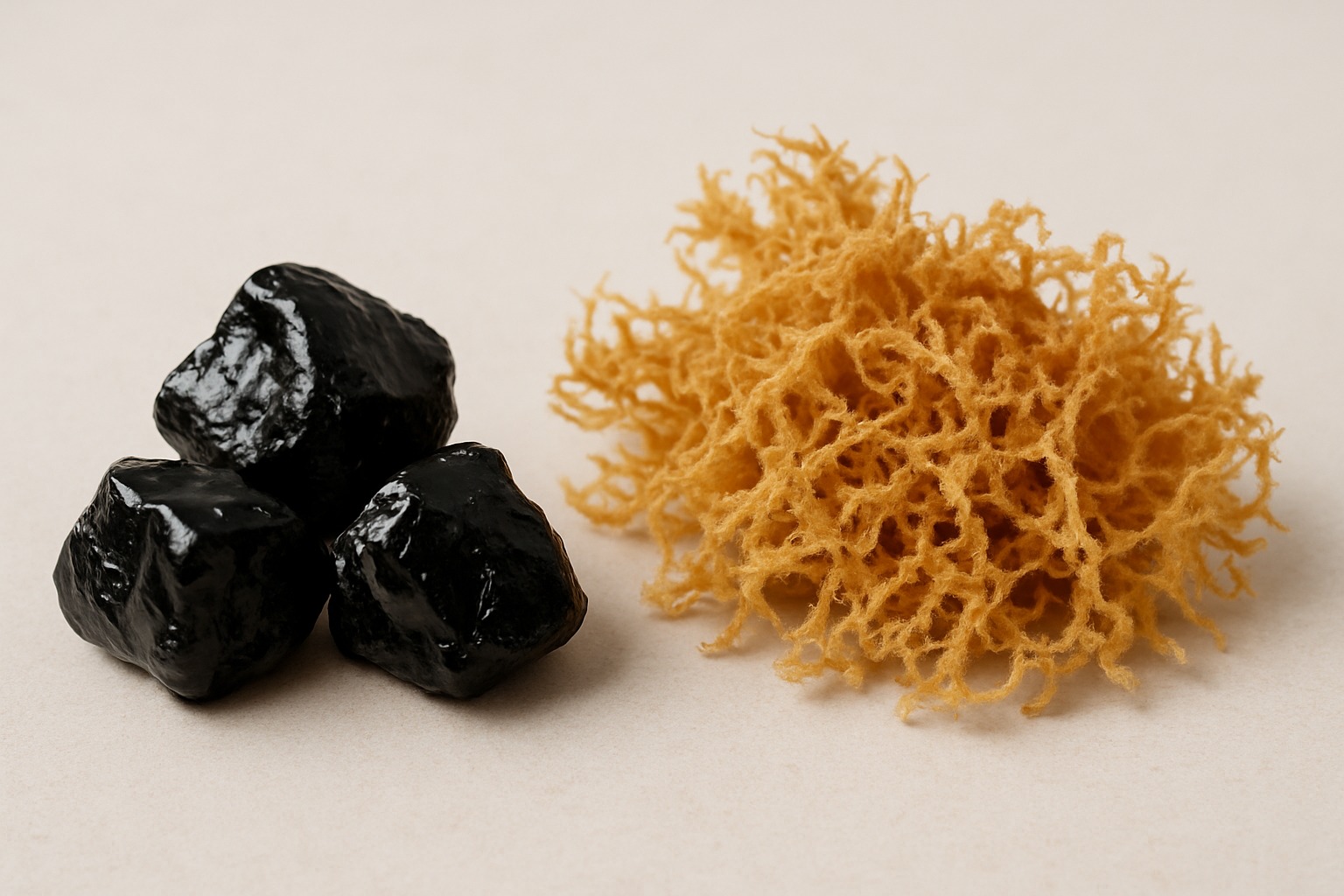
Shilajit is a natural resin that develops in mountain rock layers, known for its fulvic acid and trace mineral content. Sea moss is a type of red algae (often Irish or Caribbean sea moss) valued for its natural iodine and mineral profile.
- Shilajit: Mountain-based, resin form, rooted in Ayurvedic traditions.
- Sea moss: Ocean-based, gel or dried form, used in various cultural traditions for nourishment.
What is Sea Moss?
“Sea moss” is a common name for several species of red algae. It’s usually soaked, washed, and turned into gels, powders, or capsules. People are drawn to it for its natural mineral content, especially iodine and other trace minerals.
- Common forms: dried whole, gels, powders, capsules.
- Often added to smoothies or drinks as a thickener.
- Quality depends on harvesting location, cleaning, and testing.
Shilajit vs Sea Moss (calm comparison)
| Aspect | Shilajit | Sea Moss |
|---|---|---|
| Origin | Mountain rock layers (e.g., Himalayas). | Ocean, typically Atlantic or Caribbean regions. |
| Traditional context | Ayurvedic Rasayana substance. | Used in various coastal and Caribbean traditions as a nutritious food. |
| Typical nutrients | Trace minerals, fulvic acid (varies by source and testing). | Natural iodine, other minerals; may contain natural fibers. |
| Common forms | Resin, capsules, powders, gummies. | Gel, dried, powders, capsules. |
| Label focus | Origin, COA, heavy metals, mg per serving. | Harvest region, cleaning process, heavy metals, microbes, iodine content. |
Using Shilajit with Sea Moss (non-medical overview)
Some people are interested in combining land and sea mineral sources—such as Shilajit with a responsible sea moss product. This is usually framed as a general wellbeing choice, not as a treatment plan.
- Common approach: Shilajit taken once per day as per label, sea moss used as a food-like addition (e.g., in smoothies).
- Timing: Many keep Shilajit earlier in the day and sea moss at any convenient meal; patterns vary.
- Tracking: Because both involve minerals, some people like to discuss the combo with a practitioner who understands their full diet and health history.
Quality & sourcing checks for both
Shilajit quality
- Himalayan or clearly defined origin.
- Batch-specific COA (identity, heavy metals, microbials).
- Transparent serving size and usage guidance.
Sea moss quality
- Harvest region and whether it’s wildcrafted or farmed.
- Cleaning and drying process explained by the brand.
- Testing for heavy metals, microbes, and potential contaminants.
Who should be cautious with Shilajit + Sea Moss?
Because both may contribute minerals, it’s especially important to get professional guidance if you:
- Have thyroid conditions or are sensitive to iodine.
- Have kidney issues or need to watch mineral intake.
- Are pregnant or breastfeeding.
- Take medications or have been advised to limit certain nutrients.
A qualified healthcare professional can help you decide whether and how to use these products in your situation.
Shilajit side effects & safetyAuthoritative Sources & Research Context
Both Shilajit and Sea Moss are mineral-rich natural substances. Understanding Shilajit's composition provides context for combining it with other supplements.
Authoritative Sources
-
National Library of Medicine (NLM) – PubMed – Shilajit: a review.
PubMed – Shilajit Review -
National Library of Medicine (NLM) – PubMed – Uncovering the Roles of Heavy Metals and Humic Substances in Shilajit.
PubMed – Shilajit Minerals -
PubMed Central (PMC) – Shilajit: A Natural Phytocomplex with Potential Procognitive Activity.
PMC – Shilajit Phytocomplex -
Examine.com – Shilajit Evidence-Based Review.
Examine.com – Shilajit
This section is for general informational purposes only and is not a substitute for professional medical advice.
FAQs
Can I take Shilajit and sea moss together every day?
Is Shilajit or sea moss “better” for wellness?
Do I need both, or is one enough?
Continue Learning About Shilajit
Next steps
Whether you lean toward mountain minerals, sea minerals, or both, make quality testing, clear labels, and realistic routines your priority—and always keep your healthcare team in the loop.
Shop Pure Himalayan ShilajitThese statements have not been evaluated by the FDA. Not intended to diagnose, treat, cure, or prevent any disease. Consult a healthcare professional before use.