
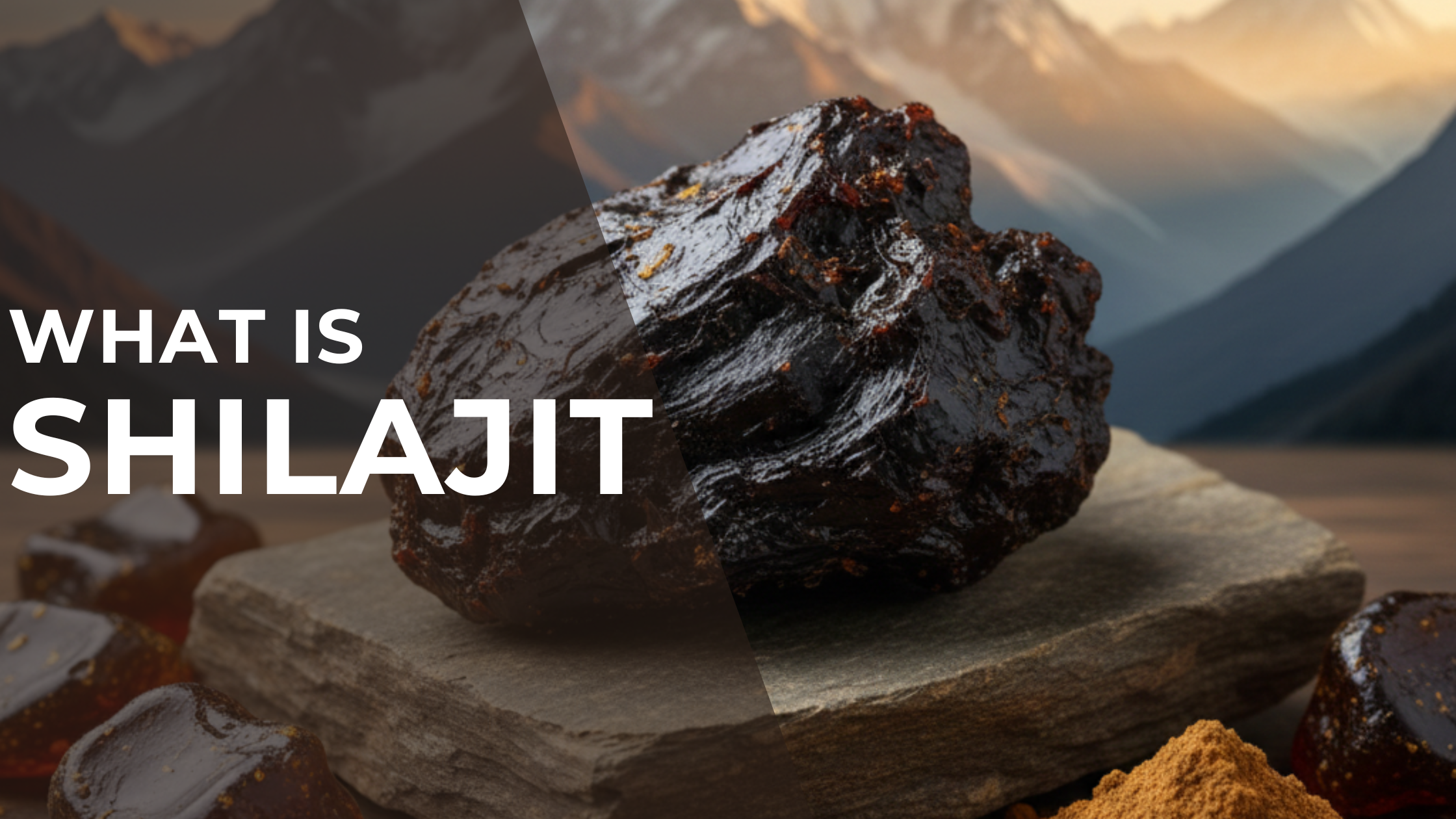
What Is Shilajit? Definition, Origin & Natural Facts
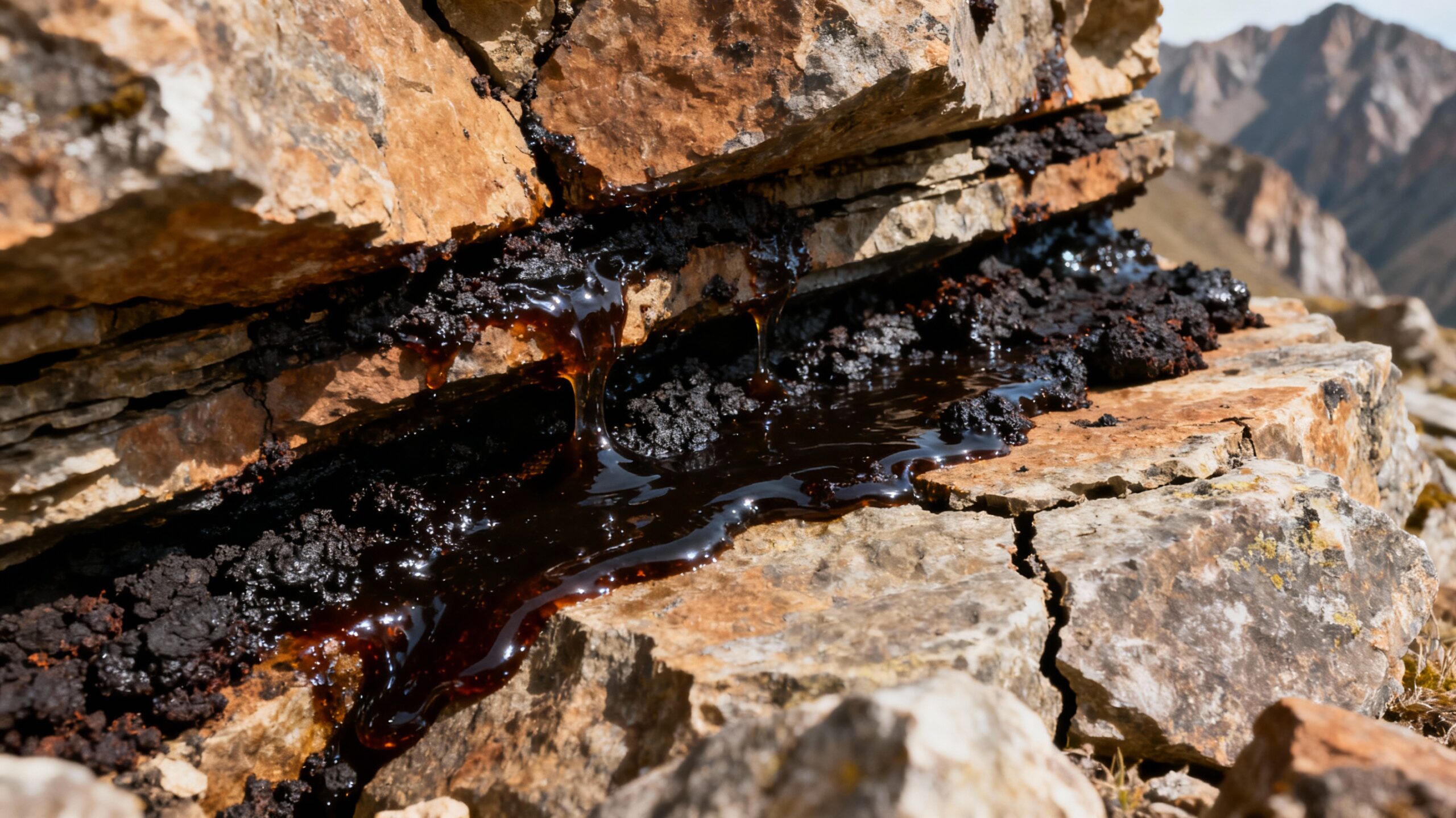
Shilajit is a dark, resin-like substance that slowly seeps out of high-altitude mountain rocks during warm seasons. It forms over long periods of time from compressed plant material and minerals. People see it everywhere online; however, very few explanations are simple, neutral, and realistic. In this guide, you’ll learn what this natural resin actually is, how it forms, what it’s made of, and why the resin form is often viewed as the most traditional way to use it.
Quick Summary
Shilajit is a natural mineral resin that forms when layers of ancient plants are compressed inside mountains for centuries. Over time, heat, pressure, and natural processes slowly turn this material into a thick, dark substance that emerges through rock cracks. After careful purification, people typically use small portions of the resin as part of traditional wellness routines.
- Forms naturally inside high-altitude mountain ranges
- Made from ancient plant matter plus minerals
- Collected as a dark, sticky resin, then purified
- Used in very small amounts as part of wellness rituals
What Is Shilajit? in Plain-Language
A helpful way to think about it:
Once collected and purified, Shilajit is usually used in very small amounts—often a pea-sized portion dissolved in warm water, milk, or tea as part of a routine.
How Does This Resin Form in Nature?
This resin doesn’t appear overnight. Instead, it develops through a long, slow process that takes place inside mountains:
- Plant layers accumulate: Over time, ancient plants and organic material build up and become trapped between rock layers.
- Compression & transformation: As centuries pass, pressure and natural processes steadily break down this material.
- Interaction with minerals: Meanwhile, the transforming organic matter interacts with minerals from surrounding rocks.
- Resin formation: Gradually, the mass becomes thick and resin-like.
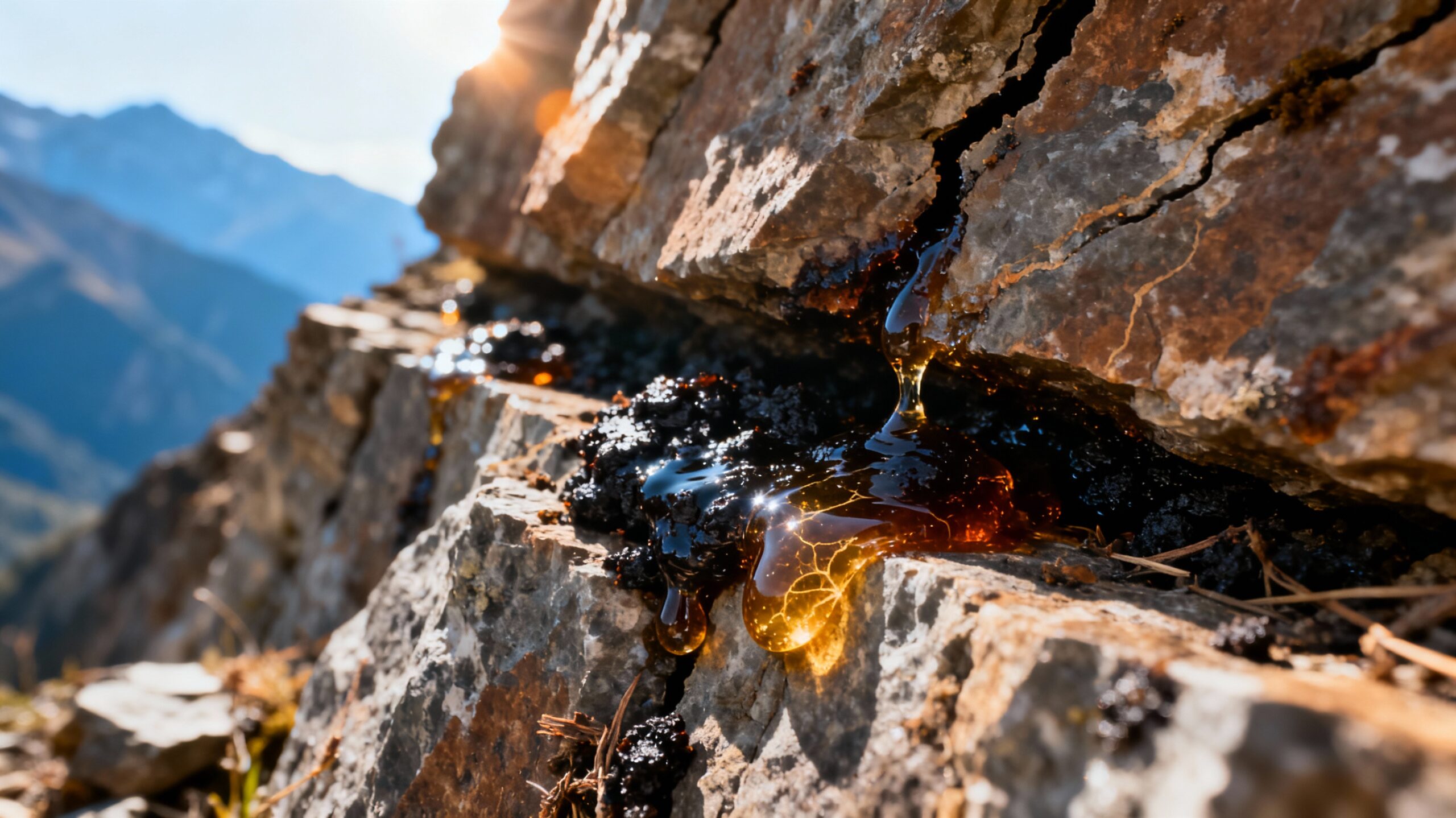
- Exudation: When temperatures warm, the resin slowly seeps out through fine cracks and appears on rock surfaces.
Because of this slow process, Shilajit is often associated with very specific, high-altitude regions where the right combination of plant life, geology, and climate all come together.
What Ingredients Make Up This Resin?
Because this is a natural product, its exact composition varies by region and source. In general, purified resin from reliable producers contains:
Key natural components
- Organic material from ancient plants
- Humic substances (including fulvic components)
- Trace minerals from surrounding rock layers
- Other naturally occurring mountain-derived compounds
What it is not
- Not a single isolated chemical compound
- Not simply charcoal or burnt matter
- Not asphalt or industrial tar
- Not a sugary syrup or flavored paste
Since it forms over long periods of time under natural conditions, each batch has its own subtle fingerprint. This variation is normal for genuine, minimally processed resin.
For a deeper breakdown of composition, you can continue with What Ingredients Make Up Shilajit?
Where Is Shilajit Found?
People mainly associate this resin with high-altitude mountain ranges, including:
- The Himalayan region
- Portions of the Tibetan plateau
- The Altai mountains
- Caucasus and other select high ranges
In these locations, collectors usually gather it from rock faces, cliffs, and natural openings during warmer months, when the resin becomes soft enough to emerge and be harvested.
How Real Shilajit Looks & Behaves
Authentic resin has some very specific characteristics:
Typical appearance
- Dark brown to almost black in color
- Glossy or slightly shiny surface when soft
- Thick, sticky, tar-like consistency at warm room temperature
- More firm or solid when stored in cooler conditions
How it behaves
- Softens when warmed between fingers
- Dissolves in warm water without gritty residue
- Has an earthy, resinous, slightly smoky aroma
Products that are extremely glossy like plastic, smell strongly chemical, or do not dissolve cleanly may not reflect authentic, traditionally sourced resin.
For a full checklist, see How to Identify Pure Shilajit.
Traditional Uses & Cultural Context
Across different regions, this substance has been known by names such as Shilajit/Salajeet, Mumiyo, and Brag-shun. Traditional texts and practitioners have referenced it for centuries, often:
- as part of complex herbal formulations
- used in very small amounts over long periods
- valued as a rare, mountain-derived substance
However, modern explanations sometimes exaggerate or reinterpret these historical references. This page, by contrast, focuses only on the neutral, non-medical aspects of its traditional use and origin.
To explore this further, see Shilajit History & Cultural Background.
Why Resin Is Considered the Most Traditional Form
Today, this material is sold as resin, powder, capsules, and gummies. Among these formats, resin is the form that most closely matches how it appears in nature.
Shilajit Resin
- Minimal processing after purification
- Single-ingredient, easy to visually inspect
- Used in tiny portions dissolved in warm liquids
Other Forms (Powder, Capsules, Gummies)
- Require additional processing steps
- May include fillers, capsule shells, sweeteners, or flavors
- Can be convenient, but further from the traditional resin experience
Many people who want the most traditional, “close to the source” experience therefore prefer purified resin over heavily processed formats.
Learn more in these guides:
Why Purification Matters So Much
Raw material scraped directly from rocks naturally contains impurities such as:
- dust and soil particles
- tiny stones and grit
- unwanted organic debris
Responsible producers typically use purification processes that include dissolving, filtering, and low-heat concentration. In this way, they remove contaminants while preserving the natural resin character.
A deeper explanation is available in How Shilajit Is Purified.
Authoritative Sources & Research Context
Shilajit is a naturally occurring, mineral-rich resin that forms over long periods through the gradual breakdown of plant material in high-altitude mountain ranges. Traditionally used in Ayurvedic wellness practices, it has gained attention for its complex composition, which includes fulvic acids and trace minerals.
Authoritative Sources
-
National Library of Medicine (NLM) – PubMed – A Comprehensive Review on Shilajit: What We Know about Its Chemical Composition.
PubMed – Shilajit Chemical Composition Review -
National Library of Medicine (NLM) – PubMed – Shilajit: a review - comprehensive overview of traditional and modern understanding.
PubMed – Shilajit Review -
PubMed Central (PMC) – Shilajit: A Natural Phytocomplex with Potential Procognitive Activity.
PMC – Shilajit Natural Phytocomplex -
ScienceDirect Topics – Shilajit - Pharmacology and Pharmaceutical Science overview.
ScienceDirect – Shilajit Pharmacology -
Healthline – Shilajit Health Guide covering benefits and precautions.
Healthline – Shilajit Health Guide -
Examine.com – Shilajit Evidence-Based Review with scientific analysis.
Examine.com – Shilajit Evidence Review
This section is for general informational purposes only and is not a substitute for professional medical advice.
FAQs: What Is Shilajit?
Is Shilajit a plant extract?
Is Shilajit man-made or synthetic?
Why is Shilajit so dark?
Does all Shilajit look exactly the same?
Is Shilajit the same as tar or asphalt?
Continue Learning About Shilajit
From Definition to Daily Ritual
Understanding what this resin is makes it easier to decide how it might fit into your routine. If you choose to use it, focus on purified resin, realistic expectations, and habits that support overall wellbeing—rather than chasing quick fixes or hype.
Explore Purified Shilajit ResinThese statements have not been evaluated by the FDA. This page is for educational purposes only and is not intended to diagnose, treat, cure, or prevent any disease. Always consult a healthcare professional before using any supplement.
About This Guide
Herbs Mill Editorial Team
The Herbs Mill team focuses on clear, compliance-first education about traditional resins and natural substances, helping readers understand what they are—and just as importantly, what they are not.